Multivitamins are combination supplements that provide several essential vitamins — typically vitamins A, B-complex (B1, B2, B3, B5, B6, B9, B12), C, D, and E — and often include important minerals such as iron, zinc, calcium, magnesium, and selenium. In Nigeria, multivitamins are among the most widely consumed over-the-counter supplements, sold in every pharmacy, patent medicine store, and supermarket chain from Lagos to Kano. They are taken as a general nutritional insurance policy — a convenient way to cover possible gaps in a person's diet with a single daily dose. Unlike a single-vitamin product such as Vitamin C or Vitamin B Complex, a multivitamin aims to provide the day's recommended intake of a broad spectrum of micronutrients at once.
What it costs online
about ₦46,280tablets
median of 11 listings
Also sampled: syrup (1 listing, ₦15,550)
≈₦497 per tablet (tablet/capsule)
0% since July 2026 · like-for-like
Sampled from 12 listings across HealthPlus and MedPlus and Supermart.ng · October 2026
Full price breakdown →Brands of Multivitamin in Nigeria
3 brands available in Nigeria.
 Vitamin A, Vitamin B1, Vitamin C, Vitamin D3 · Tablet · A4-0961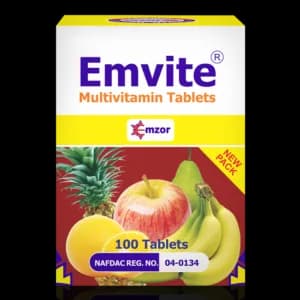
| Brand Name | Manufacturer | Strength | Form | NAFDAC Reg. No. |
|---|---|---|---|---|
| Dizpharm Nigeria Limited | Vitamin A, Vitamin B1, Vitamin C, Vitamin D3 | Tablet | A4-0961 |
| Emzor Pharmaceutical Industries | Vitamins A, B-complex, C, D, E | Tablet | 04-0134 |
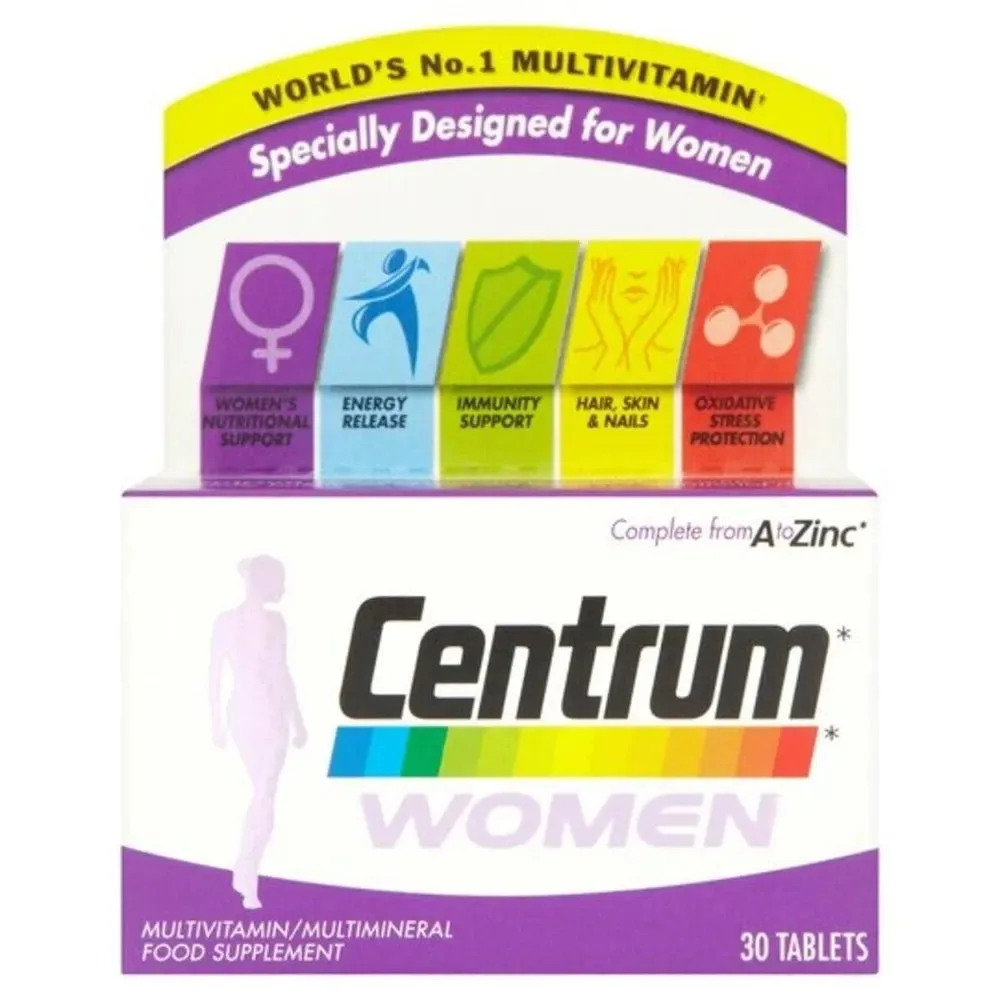
| Haleon | Vitamins A, B-complex, C, D, E, K + minerals | Tablet |
Multivitamin Price in Nigeria
As of October 2026, Multivitamin tablets sell for about ₦497 per tablet online in Nigeria (packs ₦15,840–₦68,700) at three online pharmacies; syrup ₦15,550. The online price is roughly unchanged since July 2026. Open-market prices (e.g. Idumota, Ogbogwu) are often lower.
Online retail (sampled)
Same medicine throughout — every listing contains Multivitamin. The difference is brand and pack size.
Tablet/Capsule
median ₦46,280 · 11 listings
CheapestCentrum Women Multivitamin Tablets x30(HealthPlus)
₦15,840PriciestOne A Day Men's Multivitamin x200 Tablets(Supermart.ng)
₦68,700Syrup/Suspension
median ₦15,550 · 1 listing
12 listings across HealthPlus + MedPlus + Supermart.ng · October 2026.
Unchanged since July 2026.
Multivitamin price by brand
Each brand's own listings, as its page states them — the range above spans every brand and pack size.
- Centrum price₦15,840–₦53,750· 5 listings
How to Verify Your Multivitamin is Genuine
- 1Check the NAFDAC registration number on the product packaging — all legitimate multivitamin products sold in Nigeria must bear a valid NAFDAC number
- 2Verify the NAFDAC number on the official NAFDAC Greenbook (greenbook.nafdac.gov.ng) or using the NAFDAC mobile verification app
- 3Buy only from licensed pharmacies or reputable patent medicine stores — avoid loose, unbranded, or unsealed multivitamins from open-market vendors
- 4Inspect the packaging for intact seals, a clear batch number and expiry date, and proper labelling listing each vitamin and mineral with its quantity
- 5Confirm that the tablets or capsules look uniform in colour, size, and shape — discolouration, broken tablets, or powdery residue indicate poor storage or counterfeiting
- 6For imported brands such as Centrum, check for the importer's details on the label and any holographic security features applied by the manufacturer
Where to Buy
Listed sellers stocking Multivitamin brands
- BHBigdove HealthIdumota Market, LagosMultivitaminView shop & contact
- IGIfeco Goodchi Ventures LtdAbakaliki, EbonyiDizpharm MultivitaminView shop & contact
- PCPromise CrestIdumota Market, LagosDizpharm MultivitaminView shop & contact
By state:Lagos2Abia1Benue1Cross River1Ebonyi1Enugu1Ogun1Oyo1
As stated by each shop — not live inventory. Confirm availability with the shop, and verify the NAFDAC registration on any pack before you buy.
By market: Where to buy multivitamin in Idumota Market, Lagos (2 sellers)
Buying Multivitamin wholesale, by the carton
Cartons of multivitamin are bought at Nigeria's open drug markets: Idumota Market in Lagos, Ogbogwu Market in Onitsha, Ariaria Market in Aba and Sabon Gari Market in Kano. Each guide says where the market is and how to buy there safely; where we list sellers, they are named.
- Idumota Market, Lagos · wholesale sellers in Idumota Market — 2 listed sellers here carry Multivitamin brands
- Ogbogwu Market, Onitsha
- Ariaria Market, Aba
- Sabon Gari Market, Kano
Which one are you?
I'm buying multivitamin
Tell us what you need and the quantity, and we'll connect you with a verified, NAFDAC-registered source. Free, no obligation.
I sell multivitamin
Get a free page where buyers look for them: your products, your number, how to find your shop. Independent of NAFDAC and government. Nothing goes live until you have seen it and approved it. Why list? →
See a listed shop: Blessed Michael Pharmacy → · or sign up yourself →
Wherever you buy, buy only from licensed pharmacies and verified distributors — not roadside vendors — and verify the pack's NAFDAC registration before you pay. Buying Multivitamin in bulk or for resale? See how to buy medicines in bulk in Nigeria safely.
Need Multivitamin in bulk, or can't find it near you?
Tell us what you need and we'll connect you with a verified, NAFDAC-registered source.
What is Multivitamin?
Multivitamins are particularly popular in Nigeria because of the practical challenges of maintaining a consistently balanced diet. Urban workers with long commutes, students in boarding schools, traders in markets like Ogbogwu Market (Onitsha), Idumota (Lagos), and Sabon-Gari (Kano), and patients recovering from malaria or typhoid commonly use multivitamins to support general wellness and combat perceived weakness. Paediatric multivitamin syrups are widely given to children, and specialised formulations exist for pregnant women (though prenatal vitamins usually have higher folic acid and iron content). The NAFDAC Greenbook lists multivitamin products from both Nigerian manufacturers and importers; Centrum is among the imported brands sold here.
While multivitamins are generally safe when taken at recommended doses, it is important to understand that they are supplements — not substitutes for a varied diet. The scientific evidence that healthy, well-nourished adults gain meaningful long-term benefit from daily multivitamins is modest, and the greatest benefit is seen in people with documented deficiencies, restrictive diets, pregnancy, or certain medical conditions. Fat-soluble vitamins (A, D, E, K) can accumulate in the body and cause toxicity if taken in excessive doses over time. Always take multivitamins as directed on the label and avoid stacking multiple overlapping supplements without professional guidance.
What is Multivitamin used for?
In Nigeria, Multivitamin is commonly used for:
- General nutritional insurance for adults who suspect their diet may not meet all micronutrient requirements
- Convalescence and recovery after illnesses such as malaria, typhoid fever, or surgery
- Boosting energy, immunity, and overall wellness during periods of physical or mental stress
- Supplementation during pregnancy and breastfeeding (typically with a prenatal formulation containing higher folic acid and iron)
- Supporting growth and development in children, particularly fussy eaters
- Preventing or addressing mild deficiencies in elderly Nigerians with reduced appetite or absorption
- Supplementation for people on restrictive or low-variety diets
Dosage
IMPORTANT
Always follow your doctor's or pharmacist's instructions. The information below is for general reference only.
Adults
Adult multivitamin dosage varies significantly by brand. For most once-daily multivitamin tablets, the standard dose is one tablet daily, ideally taken with food to improve absorption of fat-soluble vitamins (A, D, E, K) and reduce the chance of stomach upset. Do not exceed the dose stated on the label — unlike water-soluble vitamins, excess fat-soluble vitamins are stored in the body and can cause toxicity.
Children
Children's multivitamin doses depend strongly on the specific product and the child's age. Paediatric multivitamin syrups are commonly used in Nigeria and should be dosed using the measuring device provided, following the label instructions precisely. For chewable or tablet multivitamins intended for children over 4 years, follow the product-specific dose. Adult multivitamins should not be given to young children because the vitamin doses — particularly iron content — can be too high and cause toxicity.
Elderly
Standard adult doses are appropriate for most elderly people. Elderly Nigerians are particularly prone to B12, vitamin D, and calcium deficiencies, so multivitamin supplementation can be especially beneficial in this group. If you take a multivitamin that contains iron, mention this to your doctor if you are on other medications, as iron absorption can be affected by several common drugs.
Always take multivitamins with food to improve absorption of the fat-soluble vitamins (A, D, E, K) and reduce nausea. Do not take more than the recommended daily dose — more is not better with vitamins, and some can cause harm in excess. Avoid stacking a multivitamin with several other single-vitamin supplements unless advised by a pharmacist or doctor, because this can lead to unintentional overdosing, particularly of vitamins A, D, and iron. Store at room temperature away from direct sunlight and keep out of reach of children — iron-containing multivitamins are a leading cause of accidental poisoning in young children.
Side Effects
General information for a reader holding a pack, not a substitute for a doctor or pharmacist. If something on the serious list is happening, seek care now.
Common side effects
- •Mild nausea or stomach upset, especially when taken on an empty stomach — usually resolved by taking the supplement with food
- •Constipation or dark-coloured stools, commonly caused by the iron content in multivitamins
- •Bright yellow discolouration of urine from riboflavin (B2) — completely harmless
- •Mild headache when starting supplementation
Serious side effects — seek medical help immediately
- Iron overdose, particularly in children who accidentally swallow adult multivitamins — symptoms include vomiting, abdominal pain, and lethargy and require urgent medical attention
- Vitamin A toxicity from excessive long-term intake — causes headaches, nausea, dizziness, and in severe cases liver damage and birth defects if taken during pregnancy
- Vitamin D toxicity from prolonged high-dose intake — can raise blood calcium and damage the kidneys
- Allergic reactions including rash, itching, swelling, or difficulty breathing — rare but require immediate medical attention
When to see a doctor
Seek medical help immediately if you or a child accidentally take more than the recommended dose, particularly with iron-containing multivitamins — iron poisoning in children is a medical emergency. Also see a doctor if you develop an allergic reaction (rash, facial swelling, difficulty breathing), persistent vomiting, severe headache, or yellowing of the skin and eyes (which could indicate liver problems from vitamin A toxicity) while taking a multivitamin.
Warnings & Precautions
General information for a reader holding a pack, not a substitute for a doctor or pharmacist. If something on the serious list is happening, seek care now.
Do not take Multivitamin if you have:
- Do not take if you have a known allergy to any of the vitamins, minerals, or excipients in the formulation
- Avoid multivitamins containing vitamin A in doses above 3,000 mcg (10,000 IU) during pregnancy — use a dedicated prenatal vitamin instead
- Do not take iron-containing multivitamins if you have haemochromatosis or other iron overload disorders without medical supervision
- Use caution in people with impaired kidney function, as some minerals (particularly potassium, magnesium, and phosphate) can accumulate
Drug interactions
- •Levothyroxine (thyroid medication) — calcium and iron in multivitamins can reduce absorption; take at least 4 hours apart
- •Antibiotics (tetracyclines, fluoroquinolones including ciprofloxacin) — calcium, iron, magnesium, and zinc can bind the antibiotic and reduce its effectiveness; separate doses by at least 2 hours
- •Warfarin (blood thinner) — vitamin K content can reduce warfarin's effectiveness; keep vitamin K intake consistent and inform your doctor
- •Levodopa (Parkinson's disease) — vitamin B6 in multivitamins can reduce levodopa effectiveness when used without carbidopa
- •Methotrexate — folic acid in multivitamins can interfere with methotrexate in some conditions; discuss with your prescribing doctor
- •Other vitamin or mineral supplements — stacking multivitamins with additional single-vitamin products can lead to overdose, particularly of vitamins A, D, and iron
Pregnancy & Breastfeeding
General multivitamins for adults are not always the best choice during pregnancy because vitamin A content can exceed safe limits. Pregnant and breastfeeding women in Nigeria should ideally use a dedicated prenatal (antenatal) multivitamin — these are formulated with higher folic acid and iron, limited vitamin A (usually as beta-carotene), and appropriate iodine. The Nigerian antenatal care package routinely provides folic acid and iron supplementation for pregnant women. Always consult your antenatal healthcare provider before starting any multivitamin during pregnancy.
Used for these conditions
Related Resources for Multivitamin
Guides, articles, and tools related to Multivitamin and other vitamins & supplements medicines in Nigeria.
Frequently Asked Questions
Sources
- •NAFDAC Greenbook — the official database of all products registered with Nigeria's National Agency for Food and Drug Administration and Control. Brand-level NAFDAC numbers for Multivitamin on this page were cross-referenced against the Greenbook.
- •British National Formulary (BNF) dosing and interaction guidance for Multivitamin.
- •Nigerian Standard Treatment Guidelines (Federal Ministry of Health).
Daily puzzle: Meddle — pair five brands with their medicines. New game at midnight.