Vitamin C, also known as ascorbic acid, is one of the most popular and widely consumed supplements in Nigeria. Walk into any pharmacy in Lagos, Abuja, Port Harcourt, or Kano and you will find multiple brands of Vitamin C prominently displayed on the shelves. It is a water-soluble vitamin that the body cannot produce on its own, meaning it must be obtained through diet or supplementation. While citrus fruits like oranges and lemons, as well as local fruits such as guava, pawpaw, and garden eggs, are rich natural sources of Vitamin C, many Nigerians prefer the convenience and reliability of tablet or chewable supplement forms, particularly during the harmattan season when dry, dusty weather increases susceptibility to colds and respiratory infections.
In the NAFDAC register
110 registered products
from 62 registration holders
What it costs online
Our sampling found 1 listing (October 2026) — every one of them Ascochew, listed at ₦1,500. That is Ascochew's price, not the molecule's — one brand's price cannot honestly stand for a molecule the register lists under many, so no market-wide figure is shown.
Brands of Vitamin C (Ascorbic Acid) in Nigeria
Comes as
- Tablet100 mg· 14 makers
- Chewable tablet100 mg· 8 makers
- Syrup100 mg· 8 makers100 mg/5 mL· 8 makers
- Drops100 mg/mL· 4 makers
Those 110 products from 62 registration holders, counted in our October 2026 copy of the register, include combination products and older listings; below are the most common brands.
| Brand Name | Manufacturer | Strength | Form | NAFDAC Reg. No. |
|---|---|---|---|---|
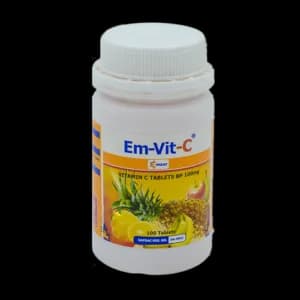 | Emzor Pharmaceutical Industries | 100mg, 500mg | Tablet | 04-4053 |
| Mason Vitamin C | Mason Natural | 500mg, 1000mg | Tablet | |
 | Nature's Field (Sylken) | 500mg, 1000mg | Chewable tablet | |
 | Vitabiotics (UK) | 500mg | Tablet |
Vitamin C (Ascorbic Acid) Price in Nigeria
As of October 2026, the only vitamin C our sampled online pharmacies (Supermart.ng) list is Ascochew, at about ₦1,500. That is Ascochew's price, not the molecule's: 58 vitamin C brands are NAFDAC-registered and generic versions usually cost less, so ask a licensed pharmacy for a generic by name and check its NAFDAC number before you pay.
We show a price here once it appears in our monthly sampling of Nigerian online pharmacies (MedPlus, HealthPlus), or when we have a reliable market figure. For now, confirm the current price directly with a licensed pharmacy.
How to Verify Your Vitamin C (Ascorbic Acid) is Genuine
- 1Check that the product has a valid NAFDAC registration number printed on the packaging — all supplements sold legally in Nigeria must be NAFDAC-registered
- 2Verify the NAFDAC registration number using the NAFDAC online portal (www.nafdac.gov.ng) or the NAFDAC mobile verification app available on Android and iOS
- 3Purchase Vitamin C only from licensed pharmacies, reputable patent medicine stores, or verified online health stores — avoid buying from open markets, bus stops, or unverified social media sellers
- 4Inspect the packaging for signs of tampering, damage, or poor-quality printing — genuine products have clean, professional labelling with clear batch numbers and expiry dates
- 5Check the expiry date before purchase and ensure the tablets are not discoloured, crumbly, or have an unusual odour
- 6For imported brands, look for evidence of proper importation documentation and ensure the product is not a grey-market or counterfeit import
Where to Buy
Buying Vitamin C (Ascorbic Acid) wholesale, by the carton
Cartons of vitamin c (ascorbic acid) are bought at Nigeria's open drug markets: Idumota Market in Lagos, Ariaria Market in Aba, Ogbogwu Market in Onitsha and Sabon Gari Market in Kano. Each guide says where the market is and how to buy there safely; where we list sellers, they are named.
- Idumota Market, Lagos · wholesale sellers in Idumota Market
- Ariaria Market, Aba
- Ogbogwu Market, Onitsha
- Sabon Gari Market, Kano
No shop we list has Vitamin C (Ascorbic Acid) on its confirmed product list yet — the market guides still tell you where the trade happens and how to buy there safely.
Which one are you?
I'm buying vitamin c
Tell us what you need and the quantity, and we'll connect you with a verified, NAFDAC-registered source. Free, no obligation.
I sell vitamin c
Get a free page where buyers look for them: your products, your number, how to find your shop. Independent of NAFDAC and government. Nothing goes live until you have seen it and approved it. Why list? →
Wherever you buy, buy only from licensed pharmacies and verified distributors — not roadside vendors — and verify the pack's NAFDAC registration before you pay. Buying Vitamin C (Ascorbic Acid) in bulk or for resale? See how to buy medicines in bulk in Nigeria safely.
Need Vitamin C (Ascorbic Acid) in bulk, or can't find it near you?
Tell us what you need and we'll connect you with a verified, NAFDAC-registered source.
What is Vitamin C (Ascorbic Acid)?
Vitamin C gained even greater prominence in Nigeria following the COVID-19 pandemic, when demand for immune-boosting supplements surged dramatically across the country. Pharmacies in Idumota, Onitsha Main Market, and Ariaria Market in Aba reported massive increases in Vitamin C sales as Nigerians sought ways to strengthen their immune defences. The vitamin functions as a powerful antioxidant, protecting cells from damage caused by free radicals. It also plays a crucial role in the production of collagen, a protein essential for skin health, wound healing, and the maintenance of cartilage, bones, and teeth. Many Nigerian women also take Vitamin C for its skin-brightening benefits, making it a popular supplement in the beauty and wellness community.
Vitamin C is listed on the World Health Organisation's List of Essential Medicines, underscoring its importance in global healthcare. In Nigeria, it is available without a prescription and can be purchased from licensed pharmacies, patent medicine stores, and reputable online health stores. It comes in several forms including standard tablets, chewable tablets (popular with children and adults who dislike swallowing pills), effervescent tablets that dissolve in water, and syrups for younger children. Popular Nigerian brands include Emzor Vitamin C, which is manufactured locally and widely trusted, as well as imported brands like Mason Natural and Vitabiotics. Nature's Field, a proudly Nigerian supplement brand, also offers a well-regarded Vitamin C product that is widely available across the country.
What is Vitamin C (Ascorbic Acid) used for?
In Nigeria, Vitamin C (Ascorbic Acid) is commonly used for:
- Boosting the immune system and supporting the body's natural defence against infections, particularly during the harmattan season and rainy season when colds and flu are common
- Prevention and reduction of the severity and duration of common cold symptoms
- Promoting healthy, glowing skin through collagen production — widely used by Nigerian women for skin brightening and anti-ageing benefits
- Enhancing the absorption of iron from plant-based foods and iron supplements, making it an important companion to ferrous sulfate treatment for anaemia
- Supporting wound healing and tissue repair after injuries or surgery
- Acting as a powerful antioxidant to protect the body's cells from oxidative stress and damage caused by free radicals
Dosage
IMPORTANT
Always follow your doctor's or pharmacist's instructions. The information below is for general reference only.
Adults
The recommended daily intake for adults is 65mg to 90mg, but therapeutic doses commonly used in Nigeria range from 250mg to 1000mg daily. For immune support, 500mg to 1000mg daily is commonly taken. Do not exceed 2000mg per day as this may cause digestive discomfort.
Children
Children aged 1-3 years: 15mg daily. Children aged 4-8 years: 25mg daily. Children aged 9-13 years: 45mg daily. Chewable tablets or syrup formulations are preferred for children. Always follow the dosage instructions on the specific product packaging or consult a pharmacist.
Elderly
Standard adult doses of 500mg to 1000mg daily are generally safe for elderly individuals. Those with kidney problems should consult a doctor before taking high doses, as excessive Vitamin C can increase the risk of kidney stones in susceptible individuals.
Vitamin C is best taken with food to minimise stomach upset. Since it is water-soluble, the body excretes excess amounts through urine, so taking very high doses provides no additional benefit. For maximum immune benefit, take Vitamin C consistently rather than only when you feel unwell. If you are taking it to enhance iron absorption, take it at the same time as your iron supplement.
Side Effects
General information for a reader holding a pack, not a substitute for a doctor or pharmacist. If something on the serious list is happening, seek care now.
Common side effects
- •Stomach upset or mild abdominal cramps, especially when taken on an empty stomach or at high doses
- •Nausea and occasional diarrhoea at doses above 1000mg
- •Heartburn or acid reflux in individuals with sensitive stomachs
Serious side effects — seek medical help immediately
- Kidney stones with prolonged use of very high doses (above 2000mg daily), particularly in individuals with a history of kidney stones
- Iron overload in people with haemochromatosis (a condition causing excessive iron absorption) when Vitamin C is taken in high doses
- Severe allergic reaction (extremely rare) — symptoms include rash, swelling of the face or throat, and difficulty breathing
When to see a doctor
See a doctor if you experience persistent stomach pain, blood in your urine, signs of kidney stones (severe flank pain, painful urination), or any allergic reaction such as skin rash, itching, or swelling. If you have a pre-existing kidney condition or are on regular medication, consult your doctor before starting high-dose Vitamin C supplementation.
Warnings & Precautions
General information for a reader holding a pack, not a substitute for a doctor or pharmacist. If something on the serious list is happening, seek care now.
Do not take Vitamin C (Ascorbic Acid) if you have:
- Individuals with a history of kidney stones should avoid high-dose Vitamin C supplementation (above 1000mg daily) without medical supervision
- People with haemochromatosis or other iron overload conditions should use Vitamin C cautiously as it enhances iron absorption
- Those with glucose-6-phosphate dehydrogenase (G6PD) deficiency should consult a doctor before taking high doses of Vitamin C
Drug interactions
- •Warfarin and other blood thinners — high-dose Vitamin C may reduce the effectiveness of warfarin; inform your doctor if you are on anticoagulant therapy
- •Aluminium-containing antacids — Vitamin C can increase aluminium absorption, which may be harmful for people with kidney problems
- •Chemotherapy drugs — some oncologists advise against high-dose antioxidants during cancer treatment; consult your oncologist
- •Statins and niacin — Vitamin C may reduce the effectiveness of some cholesterol-lowering drug combinations
- •Iron supplements — Vitamin C increases iron absorption, which is beneficial for anaemia treatment but may be problematic in iron overload conditions
Pregnancy & Breastfeeding
Vitamin C is generally safe during pregnancy and breastfeeding at recommended doses (up to 1000mg daily). It is commonly taken by pregnant Nigerian women alongside folic acid and iron supplements as part of routine antenatal care. Excessive doses above 2000mg daily should be avoided during pregnancy. Vitamin C passes into breast milk but is safe for breastfeeding mothers at standard doses. Always consult your antenatal healthcare provider for personalised guidance.
Used for these conditions
Related Resources for Vitamin C (Ascorbic Acid)
Guides, articles, and tools related to Vitamin C (Ascorbic Acid) and other vitamins & supplements medicines in Nigeria.
Frequently Asked Questions
Sources
- •NAFDAC Greenbook — the official database of all products registered with Nigeria's National Agency for Food and Drug Administration and Control. Brand-level NAFDAC numbers for Vitamin C (Ascorbic Acid) on this page were cross-referenced against the Greenbook.
- •WHO Model List of Essential Medicines — Vitamin C (Ascorbic Acid) is included in the WHO's list of essential medicines, meaning it is considered essential for basic healthcare needs.
- •British National Formulary (BNF) dosing and interaction guidance for Vitamin C (Ascorbic Acid).
- •Nigerian Standard Treatment Guidelines (Federal Ministry of Health).
Daily puzzle: Meddle — pair five brands with their medicines. New game at midnight.