Ferrous sulfate is an iron supplement used to prevent and treat iron deficiency anaemia, a condition that is alarmingly prevalent in Nigeria. According to health surveys, over 60% of Nigerian children under five and approximately 50% of pregnant women suffer from some degree of anaemia, with iron deficiency being the most common cause. In everyday Nigerian language, iron supplements are widely referred to as 'blood tonic' or 'blood builder,' and this term is so deeply embedded in local healthcare vocabulary that many Nigerians will walk into a pharmacy and ask specifically for 'blood tonic' rather than iron tablets. From the busy pharmacies of Ikeja and Surulere in Lagos to health centres in Maiduguri and Sokoto, ferrous sulfate and its related iron formulations are among the most frequently dispensed supplements in the country.
In the NAFDAC register
30 registered products
from 25 registration holders
factory country recorded for 17 of 18 active products
What it costs online
about ₦5,750tablets
median of 3 listings
Also sampled: syrup (2 listings, ₦5,750–₦6,450)
≈₦176 per tablet (tablet/capsule)
Sampled from 8 listings across HealthPlus and MedPlus and Supermart.ng · October 2026
Full price breakdown →Brands of Ferrous Sulfate in Nigeria
Comes as
- Tablet200 mg· 8 makers
Those 30 products from 25 registration holders, counted in our October 2026 copy of the register, include combination products and older listings; below are the most common brands.
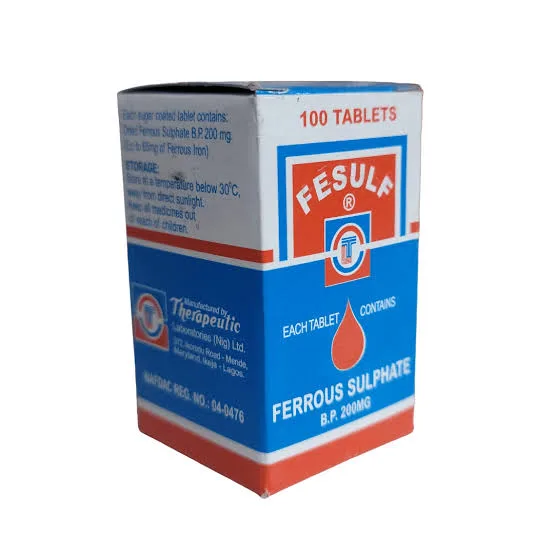
 Blood tonic syrup (iron with vitamins; composition on pack) · Syrup · 04-9722
 150 mg iron with amino acids and B vitamins per dose (syrup) · Syrup · 04-2623
| Brand Name | Manufacturer | Strength | Form | NAFDAC Reg. No. |
|---|---|---|---|---|
| Therapeutic Lab. (Nigeria) Limited | 200mg | Tablet | 04-0476 |
| Fidson Healthcare | Blood tonic syrup (iron with vitamins; composition on pack) | Syrup | 04-9722 |
| Ferrolab 12 | Embassy Pharmaceutical and Chemicals Limited | 200mg | Capsule | 04-5887 |
| MeCure's Blood Tone | Me Cure Industries Limited | 200mg | Tablet | 04-9611 |
| Reasulf | Reagan Remedies | 200mg | Tablet | B4-2517 |
| Fidson Healthcare | 150 mg iron with amino acids and B vitamins per dose (syrup) | Syrup | 04-2623 |
| Hemoforce Plus | Shalina Healthcare Nigeria Limited | Syrup | Syrup | A4-9352 |
Ferrous Sulfate Price in Nigeria
As of October 2026, a pack of 28–30 ferrous sulfate tablets sells for about ₦5,750 online in Nigeria (₦63–₦215 a tablet, strip or bulk pack) at three online pharmacies; syrup ₦5,750–₦6,450; packs of 100–120 ₦6,250–₦20,625. Open-market prices (e.g. Idumota, Ogbogwu) are often lower.
Online retail (sampled)
₦6,250 for 100 tablets
₦5,000 for 28 tablets
Same medicine throughout — every listing contains iron, as ferrous sulfate, fumarate, gluconate or a similar salt. The difference is brand, pack size and salt, not the medicine's job.
Tablet/Capsule
median ₦6,350 · 6 listings
Better valueFesulf Ferrous Sulphate B.P. 200 mg x100 Tablets(Supermart.ng)
₦6,250₦63 per tabletCosts moreFerrous Sulphate 200 mg 28 Tablets(Supermart.ng)
₦5,000₦179 per tablet2.9× the price per tablet, both 200mg
Syrup/Suspension
₦5,750 – ₦6,450 · 2 listings · ≈₦31 per ml
8 listings across HealthPlus + MedPlus + Supermart.ng · October 2026.
Tracked since July 2026 — sample still too thin to call a trend.
Ferrous Sulfate price by brand
Each brand's own listings, as its page states them — the range above spans every brand and pack size.
- Astyfer pricefrom ₦5,750· 3 listings
- Fesulf price₦6,250· 1 listing
How to Verify Your Ferrous Sulfate is Genuine
- 1Check the NAFDAC registration number on the pack. In our October 2026 copy of the register Fesulf (04-0476), Ferobin (04-9722), Ferrolab 12 (04-5887), MeCure's Blood Tone (04-9611) and Reasulf (B4-2517) are Active
- 2Verify the NAFDAC number using the official NAFDAC website (www.nafdac.gov.ng) or the NAFDAC mobile verification app available on Android and iOS
- 3Purchase iron supplements only from licensed pharmacies or accredited patent medicine stores — counterfeit haematinics have been intercepted by NAFDAC in the past
- 4Astyfer (04-2623) and Hemoforce Plus (A4-9352) are recorded Expired in our copy, and Ranferon and Chemiron do not appear in it — confirm the current status of any of these on the official Greenbook before paying a brand premium, and treat a 'blood tonic' with no NAFDAC number at all as the warning sign
- 5Check the expiry date before purchase and ensure the packaging is not damaged, faded, or showing signs of tampering
- 6Be cautious of unusually cheap iron supplements being sold in open markets like Idumota, Onitsha Main Market, or Head Bridge Market — significantly below-market prices often indicate counterfeit products
Where to Buy
Buying Ferrous Sulfate wholesale, by the carton
Cartons of ferrous sulfate are bought at Nigeria's open drug markets: Idumota Market in Lagos, Ariaria Market in Aba, Ogbogwu Market in Onitsha and Sabon Gari Market in Kano. Each guide says where the market is and how to buy there safely; where we list sellers, they are named.
- Idumota Market, Lagos · wholesale sellers in Idumota Market
- Ariaria Market, Aba
- Ogbogwu Market, Onitsha
- Sabon Gari Market, Kano
No shop we list has Ferrous Sulfate on its confirmed product list yet — the market guides still tell you where the trade happens and how to buy there safely.
Which one are you?
I'm buying ferrous sulfate
Tell us what you need and the quantity, and we'll connect you with a verified, NAFDAC-registered source. Free, no obligation.
I sell ferrous sulfate
Get a free page where buyers look for them: your products, your number, how to find your shop. Independent of NAFDAC and government. Nothing goes live until you have seen it and approved it. Why list? →
Wherever you buy, buy only from licensed pharmacies and verified distributors — not roadside vendors — and verify the pack's NAFDAC registration before you pay. Buying Ferrous Sulfate in bulk or for resale? See how to buy medicines in bulk in Nigeria safely.
Need Ferrous Sulfate in bulk, or can't find it near you?
Tell us what you need and we'll connect you with a verified, NAFDAC-registered source.
What is Ferrous Sulfate?
Iron is an essential mineral that the body needs to produce haemoglobin, the protein in red blood cells responsible for carrying oxygen from the lungs to every tissue and organ in the body. When iron levels are low, the body cannot produce enough healthy red blood cells, leading to anaemia — a condition characterised by fatigue, weakness, pale skin and nails, shortness of breath, dizziness, and reduced ability to concentrate. In Nigeria, iron deficiency anaemia is driven by multiple factors including malaria (which destroys red blood cells), hookworm infections (common in rural areas), poor dietary iron intake, heavy menstrual bleeding in women, and the increased iron demands of pregnancy and breastfeeding. Ferrous sulfate provides elemental iron that the body can use to restore haemoglobin levels and red blood cell production.
Ferrous sulfate is on the WHO Essential Medicines List and is the backbone of Nigeria's antenatal iron programme. It comes as plain 200 mg tablets and capsules (about 65 mg of elemental iron each), as combination capsules with folic acid, vitamin B12 and zinc, and as syrups and drops for children. Our October 2026 copy of the NAFDAC register holds 30 products led by ferrous sulfate, 18 of them with Active registrations, almost all Nigerian-made 200 mg tablets: Fesulf (Therapeutic Laboratories, 04-0476), MeCure's Blood Tone (04-9611), Reasulf (Reagan Remedies, B4-2517) and Embassy's Ferrolab 12 capsules (04-5887) among them. The two names most people ask for by habit are a different story in the register: Fidson's Astyfer (04-2623) is recorded Expired, its registration having run out in October 2023, and Shalina's Hemoforce Plus (A4-9352) Expired since December 2023. Ranferon and Chemiron, two more household names, do not appear in our copy at all. A lapse is a renewal matter for the holder, not proof that a bottle is fake — but a premium paid for a name the register no longer backs is a premium worth questioning.
What is Ferrous Sulfate used for?
In Nigeria, Ferrous Sulfate is commonly used for:
- Treatment of iron deficiency anaemia — the most common type of anaemia in Nigeria, causing fatigue, weakness, pallor, and reduced physical and mental performance
- Prevention of anaemia during pregnancy, when iron requirements increase significantly to support the growing baby and expanded blood volume — routinely prescribed at every antenatal clinic in Nigeria
- Recovery from blood loss due to heavy menstrual periods (menorrhagia), which affects many Nigerian women and is a leading cause of anaemia in women of reproductive age
- Supplementation for children with nutritional anaemia, particularly in areas where dietary iron intake is inadequate or where malaria and hookworm infections are common
- Supporting recovery from anaemia caused by malaria, which destroys red blood cells and is endemic across much of Nigeria
- Post-surgical and post-partum recovery when blood loss has occurred and the body needs to rebuild its iron stores and red blood cell count
Dosage
IMPORTANT
Always follow your doctor's or pharmacist's instructions. The information below is for general reference only.
Adults
For treatment of iron deficiency anaemia: 200mg ferrous sulfate (containing approximately 65mg of elemental iron) two to three times daily. For prevention in pregnancy: 200mg once or twice daily, commonly taken alongside folic acid. Combination products like Ranferon and Chemiron are typically taken as one capsule once or twice daily depending on the severity of anaemia and the specific product.
Children
Children aged 6-12 years: 200mg ferrous sulfate once daily. Children aged 2-5 years: Iron syrup is preferred — typically 2.5ml to 5ml of ferrous sulfate syrup (25mg elemental iron per 5ml) once or twice daily. Infants from 6 months: Iron drops as directed by a paediatrician, usually 0.5ml to 1ml daily. Dosing should be based on the child's weight and severity of anaemia — always consult a healthcare provider for children.
Elderly
Standard adult doses apply, but elderly individuals should start with a lower dose (200mg once daily) and increase as tolerated, as they are more prone to constipation and stomach upset from iron supplements. Elderly patients with chronic kidney disease or other conditions should have their iron supplementation guided by a doctor.
Iron is best absorbed on an empty stomach, ideally taken 30 minutes to 1 hour before meals. However, if it causes stomach upset, it can be taken with a light meal. Taking iron with Vitamin C (such as orange juice or a Vitamin C tablet) significantly enhances absorption. Avoid taking iron with tea, coffee, milk, or calcium supplements as these reduce absorption. Do not take iron tablets at the same time as antacids, tetracycline antibiotics, or ciprofloxacin — space them at least 2 hours apart.
Side Effects
General information for a reader holding a pack, not a substitute for a doctor or pharmacist. If something on the serious list is happening, seek care now.
Common side effects
- •Black or dark-coloured stools — this is completely normal and harmless, caused by unabsorbed iron, but can be alarming to patients who are not warned beforehand
- •Constipation — one of the most common complaints, especially in pregnant women already prone to constipation
- •Nausea and stomach cramps, particularly when taken on an empty stomach
- •Metallic taste in the mouth
- •Temporary staining of teeth with liquid iron preparations (can be minimised by using a straw or dropper)
Serious side effects — seek medical help immediately
- Iron overdose (iron poisoning), which is a medical emergency especially in children — symptoms include severe vomiting, bloody diarrhoea, abdominal pain, and can be fatal if untreated
- Severe allergic reaction including rash, swelling, and difficulty breathing (rare with oral forms)
- Iron overload (haemosiderosis) from chronic excessive supplementation, which can damage the liver, heart, and pancreas
- Severe constipation or bowel obstruction in rare cases, particularly in elderly patients
When to see a doctor
Seek immediate medical attention if a child accidentally swallows iron tablets, as iron poisoning can be fatal in children. Also see a doctor if you experience severe stomach pain, vomiting blood, bloody or tarry stools beyond the normal dark discolouration, persistent severe constipation, or any signs of allergic reaction. If you are taking iron for anaemia and do not feel better after 4-6 weeks of treatment, consult your doctor as further investigation may be needed.
Warnings & Precautions
General information for a reader holding a pack, not a substitute for a doctor or pharmacist. If something on the serious list is happening, seek care now.
Do not take Ferrous Sulfate if you have:
- Do not take if you have haemochromatosis (iron overload disorder) or haemosiderosis, as additional iron supplementation could be dangerous
- Not recommended for people with peptic ulcer disease or inflammatory bowel disease (ulcerative colitis, Crohn's disease) without medical supervision, as iron can worsen these conditions
- Do not give iron supplements intended for adults to children — accidental iron overdose is a leading cause of fatal poisoning in children under 6 years
- Avoid in patients receiving repeated blood transfusions, as these already increase iron levels significantly
Drug interactions
- •Tetracycline and doxycycline antibiotics — iron significantly reduces the absorption of these antibiotics; space doses at least 2-3 hours apart
- •Ciprofloxacin and other fluoroquinolone antibiotics — iron reduces their absorption and effectiveness; take at least 2 hours before or 4 hours after iron
- •Antacids (aluminium, magnesium, calcium-based) — reduce iron absorption; space at least 2 hours apart
- •Levothyroxine (thyroid medication) — iron reduces its absorption; take at least 4 hours apart
- •Tea, coffee, and dairy products — the tannins in tea and coffee and the calcium in dairy significantly reduce iron absorption; avoid consuming these within 1-2 hours of taking iron
Pregnancy & Breastfeeding
Iron supplementation is strongly recommended during pregnancy and is a standard component of antenatal care in Nigeria. The WHO recommends daily iron and folic acid supplementation for all pregnant women to prevent anaemia, which is associated with increased risk of maternal and infant mortality. Ferrous sulfate is safe during pregnancy and breastfeeding at recommended doses. Most Nigerian antenatal clinics prescribe iron from the first antenatal visit and continue throughout pregnancy and for at least 3 months after delivery. Small amounts of iron pass into breast milk, but this is beneficial for the breastfeeding infant and does not cause harm.
Used for these conditions
Related Resources for Ferrous Sulfate
Guides, articles, and tools related to Ferrous Sulfate and other vitamins & supplements medicines in Nigeria.
Frequently Asked Questions
Sources
- •NAFDAC Greenbook — the official database of all products registered with Nigeria's National Agency for Food and Drug Administration and Control. Brand-level NAFDAC numbers for Ferrous Sulfate on this page were cross-referenced against the Greenbook.
- •WHO Model List of Essential Medicines — Ferrous Sulfate is included in the WHO's list of essential medicines, meaning it is considered essential for basic healthcare needs.
- •British National Formulary (BNF) dosing and interaction guidance for Ferrous Sulfate.
- •Nigerian Standard Treatment Guidelines (Federal Ministry of Health).
Daily puzzle: Meddle — pair five brands with their medicines. New game at midnight.