Hydroxychloroquine is a tablet originally developed as an antimalarial, a close relative of chloroquine, that is now prescribed in Nigeria almost entirely for autoimmune disease. For a person with systemic lupus erythematosus (SLE) it is the one medicine rheumatologists want them to stay on indefinitely: it reduces flares, protects the kidneys and skin, lowers the long-term dose of steroids needed, and improves survival. It is also a standard first-line disease-modifying drug for rheumatoid arthritis. It works by damping the immune signalling that drives these diseases rather than by suppressing the immune system wholesale, which is why it is better tolerated than most alternatives and why it is on the WHO Model List of Essential Medicines.
In the NAFDAC register
1 registered product
from 1 registration holder
What it costs online
Price varies — check with a pharmacy. This drug has not yet appeared in our fortnightly sampling of Nigerian online pharmacies.
Brands of Hydroxychloroquine in Nigeria
Those 1 product from 1 registration holder, counted in our October 2026 copy of the register, include combination products and older listings; below are the most common brands.
| Brand Name | Manufacturer | Strength | Form | NAFDAC Reg. No. |
|---|---|---|---|---|
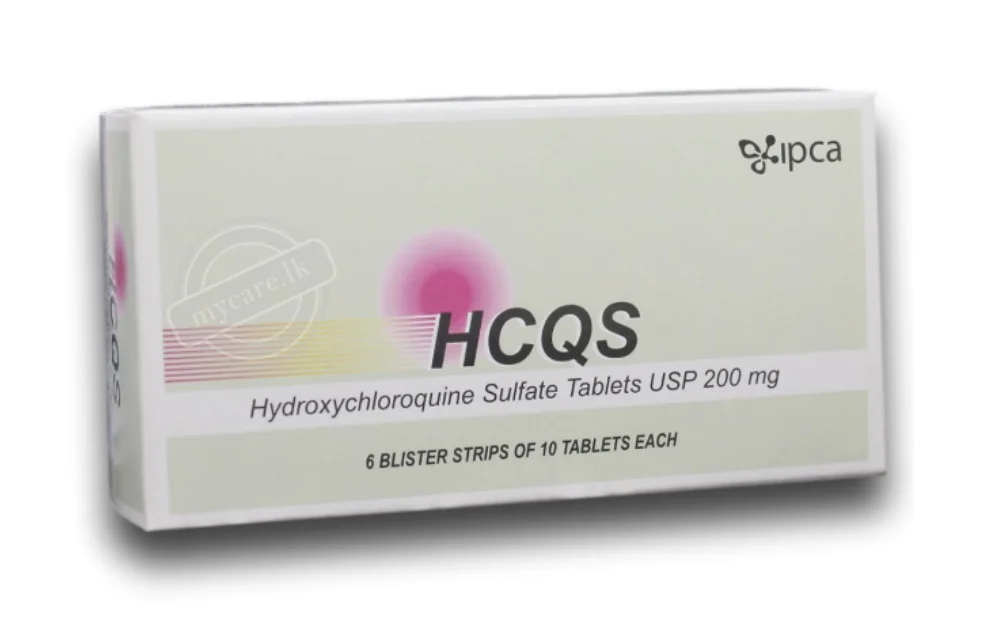 | IPCA Laboratories | 200mg | Tablet | 04-7590 |
Hydroxychloroquine Price in Nigeria
Hydroxychloroquine prices in Nigeria vary by brand, strength, and where you buy it. Confirm the current price with a licensed pharmacy, and always check the product is NAFDAC-registered before you pay.
We show a price here once it appears in our monthly sampling of Nigerian online pharmacies (MedPlus, HealthPlus), or when we have a reliable market figure. For now, confirm the current price directly with a licensed pharmacy.
How to Verify Your Hydroxychloroquine is Genuine
- 1Check the NAFDAC number on the pack — HCQS Tablets 200 mg carries 04-7590 in our copy of the register, held by IPCA Pharma Nigeria, and it is the only hydroxychloroquine registration we can see
- 2Confirm any number free with our NAFDAC checker; a hydroxychloroquine pack showing a number that belongs to a different product, or none, has not been registered here
- 3Plaquenil and most other imported brands do not appear in our register copy — that is not proof they are fake, but you are relying on the importer rather than on NAFDAC
- 4Buy from a hospital pharmacy or a licensed pharmacy that keeps the brand in stock month after month — lupus is a lifelong condition and continuity of the same brand matters
- 5Be wary of anyone selling hydroxychloroquine for COVID-19, flu or 'immune boosting' — it does not work for those and the sales pitch is a warning sign in itself
Where to Buy
Buying Hydroxychloroquine wholesale, by the carton
Cartons of hydroxychloroquine are bought at Nigeria's open drug markets: Idumota Market in Lagos, Ogbogwu Market in Onitsha, Ariaria Market in Aba and Sabon Gari Market in Kano. Each guide says where the market is and how to buy there safely; where we list sellers, they are named.
- Idumota Market, Lagos · wholesale sellers in Idumota Market
- Ogbogwu Market, Onitsha
- Ariaria Market, Aba
- Sabon Gari Market, Kano
No shop we list has Hydroxychloroquine on its confirmed product list yet — the market guides still tell you where the trade happens and how to buy there safely.
Which one are you?
I'm buying hydroxychloroquine
Tell us what you need and the quantity, and we'll connect you with a verified, NAFDAC-registered source. Free, no obligation.
I sell hydroxychloroquine
Get a free page where buyers look for them: your products, your number, how to find your shop. Independent of NAFDAC and government. Nothing goes live until you have seen it and approved it. Why list? →
See a listed shop: Blessed Michael Pharmacy → · or sign up yourself →
Wherever you buy, buy only from licensed pharmacies and verified distributors — not roadside vendors — and verify the pack's NAFDAC registration before you pay. Buying Hydroxychloroquine in bulk or for resale? See how to buy medicines in bulk in Nigeria safely.
Need Hydroxychloroquine in bulk, or can't find it near you?
Tell us what you need and we'll connect you with a verified, NAFDAC-registered source.
What is Hydroxychloroquine?
In Nigeria the drug is sold as 200 mg tablets. In our copy of the NAFDAC register the only hydroxychloroquine product with a registration is HCQS Tablets 200 mg, made by IPCA Laboratories in India and registered through IPCA Pharma Nigeria (04-7590, Active). Plaquenil, the original Sanofi brand many patients read about online, does not appear in our register copy; packs of it and of other Indian generics on Nigerian shelves have come in through unregistered channels, which is not the same as being fake but does mean nobody has vouched for them here. Lupus patients typically buy a month's supply at a time from hospital pharmacies attached to rheumatology clinics or from the larger pharmacy chains.
Nigeria had an unhappy episode with this medicine in 2020, when it was promoted worldwide as a COVID-19 treatment. Demand spiked, prices multiplied, patients with lupus could not find their tablets, and NAFDAC and the Lagos State government issued warnings after cases of poisoning from self-medication. That use was never supported by evidence and is not a reason to take it. The people who need hydroxychloroquine are the people whose doctors have prescribed it for an autoimmune condition, and for them a steady, affordable supply matters more than for almost any other tablet on this site.
What is Hydroxychloroquine used for?
In Nigeria, Hydroxychloroquine is commonly used for:
- Systemic lupus erythematosus (SLE) — taken long term by nearly every lupus patient, including during pregnancy, to reduce flares and organ damage
- Rheumatoid arthritis — as a first-line disease-modifying antirheumatic drug (DMARD), often combined with methotrexate
- Discoid and other forms of cutaneous lupus, and some photosensitive skin diseases
- Sjögren's syndrome and mixed or undifferentiated connective-tissue disease, to ease joint pain and fatigue
- Malaria prevention and treatment in the past — no longer recommended in Nigeria, where the parasite is resistant to the chloroquine family; artemisinin combinations are used instead
Dosage
IMPORTANT
Always follow your doctor's or pharmacist's instructions. The information below is for general reference only.
Adults
For lupus and rheumatoid arthritis the usual dose is 200 mg to 400 mg once a day, taken with food or a glass of milk. Since 2016 the standard advice is not to exceed 5 mg per kilogram of actual body weight per day, because eye toxicity rises above that: a 60 kg adult should not take more than 300 mg daily, which in practice usually means 200 mg one day and 400 mg the next, or 200 mg daily. Benefit builds slowly — allow 6 to 12 weeks to judge the effect, and do not stop because nothing seems to have changed in the first month.
Children
Used in children with lupus and juvenile arthritis under a paediatric rheumatologist, at no more than 5 mg per kilogram of body weight per day. The 200 mg tablet cannot be split accurately enough for small children, so it is generally avoided below about 31 kg body weight unless a pharmacist can prepare a suitable dose.
Elderly
No routine dose change, but kidney and liver function decline with age and the drug is cleared by both, so lower doses are often chosen and eye checks matter more. Older patients are also more likely to be on other medicines that prolong the heart's QT interval, which hydroxychloroquine can add to.
Take it at the same time each day with food to reduce nausea. Keep every rheumatology appointment: an eye examination at the start of treatment and yearly after five years of use is how the rare but permanent retinal damage is caught early. Do not stop suddenly on your own — lupus flares can follow weeks later. If you miss a dose, take it when you remember unless the next dose is due, then skip it; never double up.
Side Effects
General information for a reader holding a pack, not a substitute for a doctor or pharmacist. If something on the serious list is happening, seek care now.
Common side effects
- •Nausea, stomach upset and loss of appetite, usually in the first weeks and eased by taking the tablet with food
- •Headache and dizziness
- •Skin rash or itching, and darkening of the skin or gums with long use
- •Blurred vision from the drug's effect on focusing, which is different from retinal damage and settles as the eyes adjust
- •Hair thinning or lightening in some patients
Serious side effects — seek medical help immediately
- Retinal toxicity — irreversible damage to the back of the eye, uncommon but the reason for dose limits and yearly eye screening after five years
- Heart rhythm disturbance (QT prolongation) and, rarely, cardiomyopathy with prolonged high doses
- Low blood sugar, occasionally severe, especially in diabetics on insulin or glibenclamide
- Haemolysis in people with G6PD deficiency, which is common in Nigeria — ask your doctor whether you have been tested
- Muscle weakness or nerve damage with years of use
- Severe skin reactions and, rarely, bone-marrow suppression
When to see a doctor
See a doctor promptly if you notice any change in vision — blurred central vision, difficulty reading, light flashes or missing patches — as these need an eye examination, not a wait. Seek urgent care for fainting, palpitations, severe muscle weakness, dark urine or yellowing of the eyes, or signs of low blood sugar such as sweating, shaking and confusion. A new rash with fever or blistering also needs same-day review.
Warnings & Precautions
General information for a reader holding a pack, not a substitute for a doctor or pharmacist. If something on the serious list is happening, seek care now.
Do not take Hydroxychloroquine if you have:
- Known allergy to hydroxychloroquine or chloroquine
- Existing damage to the retina (maculopathy) from any cause
- Use with great care in G6PD deficiency, psoriasis, porphyria, epilepsy, and significant liver or kidney disease
- Long QT syndrome or a history of serious heart rhythm problems
Drug interactions
- •Antacids and kaolin reduce absorption — take them at least four hours apart from hydroxychloroquine
- •Digoxin — hydroxychloroquine can raise digoxin levels; monitoring is needed
- •Medicines that prolong the QT interval, including amiodarone, azithromycin, ciprofloxacin, some antipsychotics and antidepressants — the combination raises the risk of dangerous rhythms
- •Insulin, glibenclamide, metformin and other diabetes medicines — hydroxychloroquine lowers blood sugar, so doses may need adjusting
- •Tamoxifen — combined use increases the risk of eye toxicity
- •Ciclosporin and methotrexate — levels or toxicity may rise; these combinations are common in rheumatology but need monitoring
- •Rabies vaccine given into the skin may be less effective while on hydroxychloroquine
- •Antiepileptic drugs — seizure control may be reduced
Pregnancy & Breastfeeding
Hydroxychloroquine is one of the few lupus medicines that should usually be continued through pregnancy: stopping it raises the risk of flares and of complications for both mother and baby, and long experience has not shown harm to the unborn child at the doses used for autoimmune disease. It passes into breast milk in small amounts and is considered compatible with breastfeeding. Any decision to start, continue or stop should be made with the rheumatologist and obstetrician together, not alone.
Related Resources for Hydroxychloroquine
Guides, articles, and tools related to Hydroxychloroquine and other antimalarials medicines in Nigeria.
Frequently Asked Questions
Sources
- •NAFDAC Greenbook — the official database of all products registered with Nigeria's National Agency for Food and Drug Administration and Control. Brand-level NAFDAC numbers for Hydroxychloroquine on this page were cross-referenced against the Greenbook.
- •WHO Model List of Essential Medicines — Hydroxychloroquine is included in the WHO's list of essential medicines, meaning it is considered essential for basic healthcare needs.
- •British National Formulary (BNF) dosing and interaction guidance for Hydroxychloroquine.
- •Nigerian Standard Treatment Guidelines (Federal Ministry of Health).
Daily puzzle: Meddle — pair five brands with their medicines. New game at midnight.