Glimepiride is a sulfonylurea — a tablet that lowers blood sugar by prompting the pancreas to release more insulin. It is the newest of the sulfonylureas in common use, and the practical differences from the older glibenclamide matter: it is taken once daily, it is cleared partly by the liver rather than only the kidneys, and it causes fewer episodes of dangerously low blood sugar. For a country where glibenclamide has been the default second drug for decades, that last point is the important one.
In the NAFDAC register
53 registered products
from 32 registration holders
+1 more country
What it costs online
Our sampling found 3 listings (October 2026) — every one of them Amaryl, listed at ₦13,390–₦29,800. That is Amaryl's price, not the molecule's — one brand's price cannot honestly stand for a molecule the register lists under many, so no market-wide figure is shown.
Brands of Glimepiride in Nigeria
Those 53 products from 32 registration holders, counted in our October 2026 copy of the register, include combination products and older listings; below are the most common brands.
| Brand Name | Manufacturer | Strength | Form | NAFDAC Reg. No. |
|---|---|---|---|---|
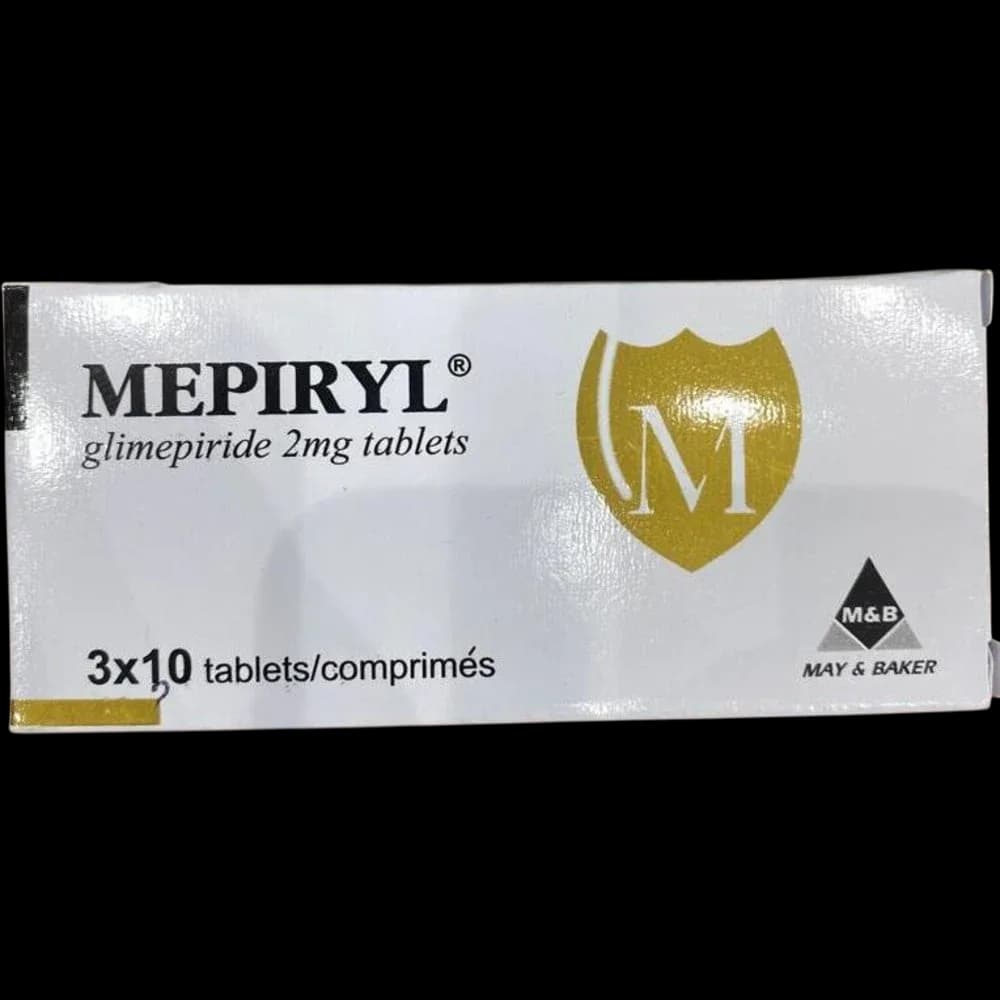 | May & Baker Nigeria PLC | 2mg | Tablet | 04-9605 |
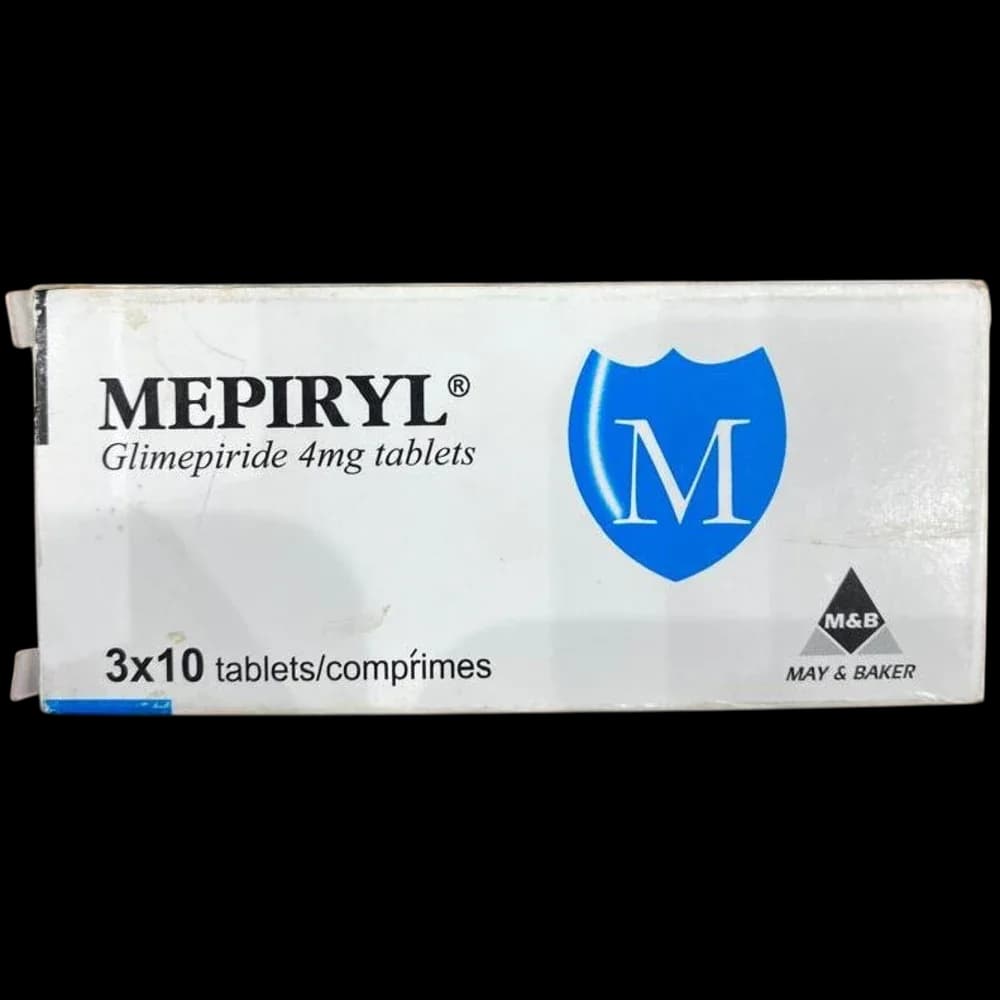 | May & Baker Nigeria PLC | 4mg | Tablet | 04-9439 |
| Co-Mepiryl Tablet 2 mg/500 mg | May & Baker Nigeria PLC | 2mg + 500mg | Tablet | A4-2825 |
| Getryl 2 mg Tablets | Getz Pharma Nigeria Limited | 2mg | Tablet | A4-6223 |
| Betix 2 mg | Takki Healthcare Limited | 2mg | Tablet | B4-7578 |
Glimepiride Price in Nigeria
As of October 2026, the only glimepiride our sampled online pharmacies (HealthPlus and MedPlus) list is Amaryl, at about ₦29,680. That is Amaryl's price, not the molecule's: 16 glimepiride brands are NAFDAC-registered and generic versions usually cost less, so ask a licensed pharmacy for a generic by name and check its NAFDAC number before you pay.
We show a price here once it appears in our monthly sampling of Nigerian online pharmacies (MedPlus, HealthPlus), or when we have a reliable market figure. For now, confirm the current price directly with a licensed pharmacy.
How to Verify Your Glimepiride is Genuine
- 1Check the NAFDAC number on the pack — Mepiryl 2mg carries 04-9605 and Mepiryl 4mg carries 04-9439 in our copy of the register.
- 2Other registered products include Co-Mepiryl 2mg/500mg (A4-2825), Getryl 2mg (A4-6223) and Betix 2mg (B4-7578).
- 3Confirm any brand with our NAFDAC checker before paying.
- 4Check the strength carefully. Glimepiride comes in 1mg, 2mg, 3mg and 4mg tablets that look similar, and taking 4mg when you were prescribed 1mg is a hypoglycaemia risk, not a minor slip.
- 5Note whether your pack is glimepiride alone or a combination with metformin — the combination packs carry two figures such as 2mg/500mg.
Where to Buy
Buying Glimepiride wholesale, by the carton
Cartons of glimepiride are bought at Nigeria's open drug markets: Idumota Market in Lagos, Ariaria Market in Aba, Ogbogwu Market in Onitsha and Sabon Gari Market in Kano. Each guide says where the market is and how to buy there safely; where we list sellers, they are named.
- Idumota Market, Lagos · wholesale sellers in Idumota Market
- Ariaria Market, Aba
- Ogbogwu Market, Onitsha
- Sabon Gari Market, Kano
No shop we list has Glimepiride on its confirmed product list yet — the market guides still tell you where the trade happens and how to buy there safely.
Which one are you?
I'm buying glimepiride
Tell us what you need and the quantity, and we'll connect you with a verified, NAFDAC-registered source. Free, no obligation.
I sell glimepiride
Get a free page where buyers look for them: your products, your number, how to find your shop. Independent of NAFDAC and government. Nothing goes live until you have seen it and approved it. Why list? →
Wherever you buy, buy only from licensed pharmacies and verified distributors — not roadside vendors — and verify the pack's NAFDAC registration before you pay. Buying Glimepiride in bulk or for resale? See how to buy medicines in bulk in Nigeria safely.
Need Glimepiride in bulk, or can't find it near you?
Tell us what you need and we'll connect you with a verified, NAFDAC-registered source.
What is Glimepiride?
Nigeria's supply of glimepiride is well established. Our copy of the NAFDAC register shows twenty-two active registrations from eleven companies — sixteen of them glimepiride on its own and six fixed combinations with metformin in a single tablet. The field is led by May & Baker's Mepiryl and Co-Mepiryl, made in Nigeria, alongside Getz Pharma's Getryl and a number of Indian-made generics.
Glimepiride sits at a specific point in type 2 diabetes treatment: after metformin, when one drug is no longer holding blood sugar down, and usually before insulin. It is far cheaper than the newer classes — the SGLT2 tablets, the DPP-4 inhibitors, the GLP-1 injections — which is why it remains a mainstay in Nigerian practice regardless of what international guidelines now prefer.
What is Glimepiride used for?
In Nigeria, Glimepiride is commonly used for:
- Type 2 diabetes, added to metformin when blood sugar remains above target
- Type 2 diabetes as the first tablet where metformin is not tolerated or is contraindicated
- As a fixed combination with metformin, reducing the number of tablets taken
- Not for type 1 diabetes — there is no insulin-producing capacity left for it to stimulate
- Not for diabetic ketoacidosis, which is an emergency needing insulin
Dosage
IMPORTANT
Always follow your doctor's or pharmacist's instructions. The information below is for general reference only.
Adults
Treatment starts low, usually at 1mg once daily with or immediately before breakfast, and is increased in 1mg steps at one- to two-week intervals according to blood sugar readings. Most people settle between 1mg and 4mg daily; going above that rarely adds much. It is taken once a day, always with the first main meal — and this is the part that matters most in practice: taking glimepiride and then skipping the meal is the classic way to end up with a hypo.
Children
Glimepiride is not established for use in children. Diabetes in a child is usually type 1 and needs insulin and specialist care.
Elderly
Older adults are at markedly higher risk of low blood sugar on any sulfonylurea, and less able to recognise it. Treatment starts at the lowest dose and increases slowly, and in frail or irregularly eating older people a sulfonylurea may be the wrong choice altogether.
KNOW WHAT A HYPO FEELS LIKE AND CARRY SUGAR. Low blood sugar comes on as sweating, shaking, hunger, a pounding heart, confusion or sudden irritability, and it is treated immediately with glucose, sweets or a sugary drink — not with food that takes time to digest. The risks rise when meals are skipped, during fasting, after unusual exercise and with alcohol. Ramadan fasting in particular needs the dose reviewed with a doctor BEFORE the month starts, not after the first difficult day.
Side Effects
General information for a reader holding a pack, not a substitute for a doctor or pharmacist. If something on the serious list is happening, seek care now.
Common side effects
- •Low blood sugar (hypoglycaemia) — the main one, and the reason for the meal rule
- •Weight gain
- •Nausea and stomach upset
- •Headache and dizziness
- •Rash
Serious side effects — seek medical help immediately
- Severe or prolonged hypoglycaemia, which can cause seizures, coma and lasting harm
- Severe allergic reactions, including rare serious skin reactions
- Low blood counts — uncommon
- Liver enzyme disturbance and, rarely, jaundice
- Low blood sodium
When to see a doctor
Treat a hypo immediately with sugar, and seek urgent help if the person is confused, drowsy or cannot swallow — that is an emergency. See a doctor if hypos happen more than occasionally, since the dose is probably wrong. Report yellowing of the eyes or skin, an unexplained spreading rash, or dark urine. Anyone planning to fast, travel across time zones, or start significant exercise should have the dose reviewed first.
Warnings & Precautions
General information for a reader holding a pack, not a substitute for a doctor or pharmacist. If something on the serious list is happening, seek care now.
Do not take Glimepiride if you have:
- Type 1 diabetes
- Diabetic ketoacidosis
- Severe kidney or liver impairment
- Known hypersensitivity to glimepiride, other sulfonylureas or sulfonamides
- Pregnancy and breastfeeding
Drug interactions
- •Alcohol — increases and prolongs the risk of hypoglycaemia, and can mask the warning signs
- •Other diabetes medicines, including insulin — additive glucose-lowering; doses need coordinating
- •Beta-blockers such as atenolol — these mask the warning symptoms of a hypo, which is the dangerous part
- •Fluconazole, co-trimoxazole and clarithromycin — raise glimepiride levels and hypo risk
- •Corticosteroids such as prednisolone, and diuretics — push blood sugar up, often unexpectedly
- •NSAIDs and warfarin — increased effect of glimepiride
Pregnancy & Breastfeeding
Glimepiride is not used in pregnancy. Blood sugar control in pregnancy matters enormously and is managed with insulin, or in some cases metformin, under specialist care — sulfonylureas are switched away from before conception where possible. Tell your doctor if you are planning a pregnancy. It is also avoided while breastfeeding.
Related Resources for Glimepiride
Guides, articles, and tools related to Glimepiride and other diabetes medicines in Nigeria.
Frequently Asked Questions
Sources
- •NAFDAC Greenbook — the official database of all products registered with Nigeria's National Agency for Food and Drug Administration and Control. Brand-level NAFDAC numbers for Glimepiride on this page were cross-referenced against the Greenbook.
- •British National Formulary (BNF) dosing and interaction guidance for Glimepiride.
- •Nigerian Standard Treatment Guidelines (Federal Ministry of Health).
Daily puzzle: Meddle — pair five brands with their medicines. New game at midnight.