Levonorgestrel is the active ingredient in emergency contraceptive pills — the 'morning-after pill' — used to prevent pregnancy after unprotected sex or when a regular method has failed, such as a burst condom or missed pills. In Nigeria it is sold over the counter and is extremely widely used, best known by the brand names Postinor-2 (Gedeon Richter) and the locally made Postpill and Lydia Postpill (DKT). It is a single-use, backup method — not a routine form of family planning.
In the NAFDAC register
22 registered products
from 15 registration holders
What it costs online
about ₦2,880
≈₦1,638 per tablet (tablet/capsule)
1% since July 2026 · like-for-like
Sampled from 4 listings across HealthPlus and MedPlus · October 2026
Full price breakdown →Brands of Levonorgestrel (emergency contraception) in Nigeria
Comes as
- Tablet1.5 mg· 6 makers
Those 22 products from 15 registration holders, counted in our October 2026 copy of the register, include combination products and older listings; below are the most common brands.
| Brand Name | Manufacturer | Strength | Form | NAFDAC Reg. No. |
|---|---|---|---|---|
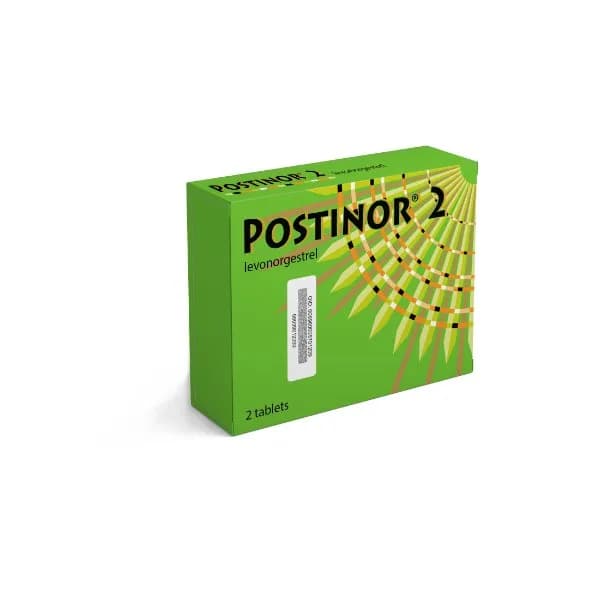 | Gedeon Richter | 0.75mg | Tablet | 04-6985 |
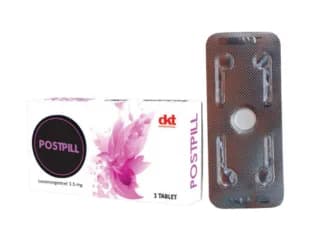 | DKT International | 1.5mg | Tablet | B4-2176 |
| Lydia Postpill | DKT International | 1.5mg | Tablet | |
| Natnaw | Unosource Pharma Nigeria Limited | 1.5mg | Tablet | B4-8612 |
Levonorgestrel (emergency contraception) Price in Nigeria
As of October 2026, Levonorgestrel (emergency contraception) tablets sell for about ₦1,638 per tablet online in Nigeria (packs ₦1,850–₦3,500; Postpill) at HealthPlus and MedPlus. The online price is up 1% since July 2026. That figure is for Postpill; 10 other levonorgestrel (emergency contraception) brands are NAFDAC-registered and generic versions usually cost less. Open-market prices (e.g. Idumota, Ogbogwu) are often lower.
Online retail (sampled)
Same medicine throughout — every listing contains Levonorgestrel (emergency contraception). The difference is brand and pack size.
median ₦2,880 · 4 listings
CheapestDKT POSTPILL 1.5MG * 1 TABS(MedPlus)
₦1,850PriciestPostinor 2 (Levonorgestrel) 0.75mg Tabs(HealthPlus)
₦2,9104 listings across HealthPlus + MedPlus — brands and pack sizes vary · October 2026.
tablets: about ₦1,638 per tablet (₦1,425–₦1,850), from the 2 listings that state a pack size.
Up 1% since July 2026.
Levonorgestrel (emergency contraception) price by brand
Each brand's own listings, as its page states them — the range above spans every brand and pack size.
- Postinor-2 price₦2,850–₦2,910· 2 listings
- Postpill price₦1,850–₦3,500· 2 listings
How to Verify Your Levonorgestrel (emergency contraception) is Genuine
- 1Check the NAFDAC registration number on the pack — genuine emergency contraceptive brands sold in Nigeria must carry a valid NAFDAC number
- 2Verify the NAFDAC number using the NAFDAC Green Book or the NAFDAC mobile app, especially for imported Postinor-2
- 3Buy from licensed pharmacies and registered patent medicine stores, or through recognised social-marketing brands like Postpill (DKT)
- 4Check the expiry date and that the blister and carton are sealed, intact, and untampered
- 5Be wary of unusually cheap or loose tablets sold without a proper pack, as emergency contraceptives are commonly counterfeited
- 6If in doubt, ask the pharmacist to confirm the brand and show you the sealed pack
Where to Buy
Buying Levonorgestrel (emergency contraception) wholesale, by the carton
Cartons of levonorgestrel (emergency contraception) are bought at Nigeria's open drug markets: Idumota Market in Lagos, Ogbogwu Market in Onitsha, Ariaria Market in Aba and Sabon Gari Market in Kano. Each guide says where the market is and how to buy there safely; where we list sellers, they are named.
- Idumota Market, Lagos · wholesale sellers in Idumota Market
- Ogbogwu Market, Onitsha
- Ariaria Market, Aba
- Sabon Gari Market, Kano
No shop we list has Levonorgestrel (emergency contraception) on its confirmed product list yet — the market guides still tell you where the trade happens and how to buy there safely.
Which one are you?
I'm buying levonorgestrel
Tell us what you need and the quantity, and we'll connect you with a verified, NAFDAC-registered source. Free, no obligation.
I sell levonorgestrel
Get a free page where buyers look for them: your products, your number, how to find your shop. Independent of NAFDAC and government. Nothing goes live until you have seen it and approved it. Why list? →
See a listed shop: Blessed Michael Pharmacy → · or sign up yourself →
Wherever you buy, buy only from licensed pharmacies and verified distributors — not roadside vendors — and verify the pack's NAFDAC registration before you pay. Buying Levonorgestrel (emergency contraception) in bulk or for resale? See how to buy medicines in bulk in Nigeria safely.
Need Levonorgestrel (emergency contraception) in bulk, or can't find it near you?
Tell us what you need and we'll connect you with a verified, NAFDAC-registered source.
What is Levonorgestrel (emergency contraception)?
Levonorgestrel works mainly by delaying or preventing the release of an egg (ovulation). If there is no egg to be fertilised, pregnancy cannot start. Importantly, it does not end an existing pregnancy and is not an abortion pill — if you are already pregnant, it will not work and will not harm the pregnancy. Because it acts before fertilisation, timing is everything: the sooner it is taken after unprotected sex, the better it works.
Emergency contraception should be taken as soon as possible, ideally within 72 hours (3 days) of unprotected sex; it still has some effect up to 120 hours (5 days) but becomes less reliable each day. Older packs come as two 0.75mg tablets taken together (or 12 hours apart), while newer packs are a single 1.5mg tablet — both are equivalent. It is a safe, one-off measure, but it is less effective than regular contraception and offers no protection against sexually transmitted infections, so it should not replace condoms or ongoing family planning. Genuine packs carry a NAFDAC registration number.
What is Levonorgestrel (emergency contraception) used for?
In Nigeria, Levonorgestrel (emergency contraception) is commonly used for:
- Preventing pregnancy after unprotected sex
- Backup after a contraceptive failure — a burst or slipped condom, or missed combined pills
- A single emergency measure when no regular method was used
- Reducing the risk of pregnancy when taken as soon as possible, ideally within 72 hours
- A safe over-the-counter option that does not affect an existing pregnancy
Dosage
IMPORTANT
Always follow your doctor's or pharmacist's instructions. The information below is for general reference only.
Adults
Take the emergency contraceptive as soon as possible after unprotected sex. For a single 1.5mg tablet (e.g. Postpill), take one tablet once. For the two-tablet 0.75mg pack (e.g. Postinor-2), take both tablets together, or one tablet followed by the second 12 hours later. It works best within 72 hours (3 days) and can be used up to 120 hours (5 days), becoming less effective the longer you wait. If you vomit within 2-3 hours of taking it, take another dose, as the first may not have been absorbed.
Children
Emergency contraception can be used by adolescents of reproductive age who need it, following the same dosing. Young people should ideally also be linked to a health worker for advice on ongoing contraception and protection against sexually transmitted infections.
Elderly
Not applicable — emergency contraception is used by people who can become pregnant.
Emergency contraception is a one-off backup, not a routine method — it is less effective than regular contraception (the pill, injection, implant, or IUD) and should not be relied on repeatedly. Using it more than occasionally is a sign you would benefit from a regular method. It does not protect against HIV or other sexually transmitted infections. Your next period may come earlier or later than usual; if it is more than a week late, take a pregnancy test.
Side Effects
General information for a reader holding a pack, not a substitute for a doctor or pharmacist. If something on the serious list is happening, seek care now.
Common side effects
- •Nausea, and sometimes vomiting
- •Irregular bleeding or spotting, or a change in the timing of your next period
- •Tiredness, headache, or dizziness
- •Breast tenderness
- •Lower abdominal (period-like) cramps
Serious side effects — seek medical help immediately
- Severe lower abdominal pain 3-5 weeks later, which could signal an ectopic (tubal) pregnancy — seek medical care
- Signs of an allergic reaction: rash, swelling of the face or throat, or difficulty breathing
- A period that is very late, very light, or unusual — take a pregnancy test and see a health worker if pregnant
When to see a doctor
See a health worker if your period is more than a week late (to rule out pregnancy), if you have severe or one-sided lower abdominal pain in the weeks afterwards (a possible ectopic pregnancy), or if you find yourself needing emergency contraception often — that is a signal to start a reliable regular method. Also seek advice if there is any chance you were exposed to a sexually transmitted infection, as the morning-after pill does not protect against them.
Warnings & Precautions
General information for a reader holding a pack, not a substitute for a doctor or pharmacist. If something on the serious list is happening, seek care now.
Do not take Levonorgestrel (emergency contraception) if you have:
- Do not use if you are allergic to levonorgestrel
- It will not work if you are already pregnant — but it does not harm an existing pregnancy
- It is not intended as a regular, repeated method of contraception
- It does not protect against HIV or other sexually transmitted infections
Drug interactions
- •Some medicines reduce how well emergency contraception works, including certain anti-epileptics (carbamazepine, phenytoin), rifampicin (a TB medicine), and the herbal remedy St John's Wort — a copper IUD or a higher dose may be advised if you take these
- •Efavirenz-based HIV treatment can reduce its effectiveness
- •It does not make regular contraceptive pills less effective, but if you are starting or continuing regular pills, use condoms as backup for the next 7 days
Pregnancy & Breastfeeding
Levonorgestrel emergency contraception does not end or harm an existing pregnancy — if you are already pregnant it simply will not work. It is considered safe while breastfeeding; a common precaution is to breastfeed just before taking the dose. After using emergency contraception, consider starting or restarting a regular contraceptive method, and use condoms in the meantime.
Used for these conditions
Related Resources for Levonorgestrel (emergency contraception)
Guides, articles, and tools related to Levonorgestrel (emergency contraception) and other family planning medicines in Nigeria.
Frequently Asked Questions
Sources
- •NAFDAC Greenbook — the official database of all products registered with Nigeria's National Agency for Food and Drug Administration and Control. Brand-level NAFDAC numbers for Levonorgestrel (emergency contraception) on this page were cross-referenced against the Greenbook.
- •WHO Model List of Essential Medicines — Levonorgestrel (emergency contraception) is included in the WHO's list of essential medicines, meaning it is considered essential for basic healthcare needs.
- •British National Formulary (BNF) dosing and interaction guidance for Levonorgestrel (emergency contraception).
- •Nigerian Standard Treatment Guidelines (Federal Ministry of Health).
Daily puzzle: Meddle — pair five brands with their medicines. New game at midnight.