Misoprostol is a synthetic prostaglandin E1 analogue that is listed on the World Health Organisation's List of Essential Medicines for multiple critical indications. It was originally developed and marketed as Cytotec by Pfizer for the prevention of gastric ulcers in patients taking non-steroidal anti-inflammatory drugs (NSAIDs). However, its ability to stimulate uterine contractions and soften the cervix has made it an invaluable medicine in obstetric and gynaecological care. In Nigeria, misoprostol's most important role is in the prevention and treatment of postpartum haemorrhage (PPH) — excessive bleeding after childbirth — which remains one of the leading causes of maternal death in the country. Nigeria accounts for approximately 23% of all global maternal deaths, and haemorrhage is responsible for an estimated 25-30% of these deaths. Misoprostol is a life-saving medicine that, when used correctly and under appropriate medical guidance, has the potential to significantly reduce maternal mortality in Nigeria.
In the NAFDAC register
28 registered products
from 23 registration holders
What it costs online
Price varies — check with a pharmacy. This drug has not yet appeared in our fortnightly sampling of Nigerian online pharmacies.
Brands of Misoprostol in Nigeria
Those 28 products from 23 registration holders, counted in our October 2026 copy of the register, include combination products and older listings; below are the most common brands.
| Brand Name | Manufacturer | Strength | Form | NAFDAC Reg. No. |
|---|---|---|---|---|
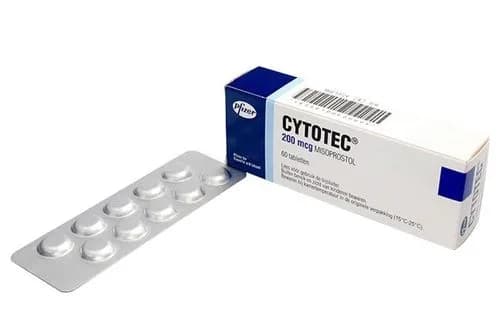 | Pfizer | 200mcg | Tablet | B4-0307 |
| Misoclear | MSI Nigeria Reproductive Choices Ltd/Gte | 200mcg | Tablet | A4-6446 |
| Mistol | Society for Family Health | 200mcg | Tablet | A4-5922 |
| Jekprostol | Jeksam Pharmaceuticals | 200mcg | Tablet | B4-5623 |
| Misofree | Aquatix Pharmaceuticals | 200mcg | Tablet | C4-1140 |
| Cytofix | Embassy Pharmaceutical and Chemicals Limited | 200mcg | Tablet | A4-7182 |
Misoprostol Price in Nigeria
Misoprostol has no sampled online price here, and the reason is worth knowing: the registered 200 mcg tablets reach Nigeria through hospital pharmacies, primary health centres and the maternal-health programmes of MSI, the Society for Family Health and DKT, not through open online listings, and a facility usually bills it inside the cost of a delivery or of post-abortion care rather than as a line of its own. A pack offered loose by a street seller, a social-media account or an unregistered shop, at any price, is the pack to refuse — it is outside the only settings equipped to manage the heavy bleeding misoprostol can cause.
We show a price here once it appears in our monthly sampling of Nigerian online pharmacies (MedPlus, HealthPlus), or when we have a reliable market figure. For now, confirm the current price directly with a licensed pharmacy.
How to Verify Your Misoprostol is Genuine
- 1Check the NAFDAC registration number on the pack. In our October 2026 copy of the register, Cytotec (B4-0307), Misoclear (A4-6446), Mistol (A4-5922), Jekprostol (B4-5623), Misofree (C4-1140) and Cytofix (A4-7182) are all Active
- 2Enter the number in our free NAFDAC checker and confirm the product name, strength and holder match the pack — misoprostol is a counterfeit target precisely because a weak tablet fails silently in an emergency
- 3Obtain misoprostol only from NAFDAC-registered pharmacies, hospital pharmacies, or authorised health facilities. Due to its potential for misuse, distribution of misoprostol in Nigeria is more tightly controlled than many other medicines.
- 4Check that the tablets are sealed in their original aluminium foil blister packaging — misoprostol is sensitive to moisture and must be protected. Loose or repackaged tablets may have degraded and lost potency.
- 5Verify the expiry date and batch number. Do not use expired misoprostol as it may have reduced potency, which could be dangerous in emergency obstetric situations where reliable drug action is critical.
- 6If you are a healthcare provider procuring misoprostol for facility use, ensure it is sourced from WHO-prequalified manufacturers or NAFDAC-approved distributors to guarantee quality and potency.
Where to Buy
Buying Misoprostol wholesale, by the carton
Cartons of misoprostol are bought at Nigeria's open drug markets: Idumota Market in Lagos, Ariaria Market in Aba, Ogbogwu Market in Onitsha and Sabon Gari Market in Kano. Each guide says where the market is and how to buy there safely; where we list sellers, they are named.
- Idumota Market, Lagos · wholesale sellers in Idumota Market
- Ariaria Market, Aba
- Ogbogwu Market, Onitsha
- Sabon Gari Market, Kano
No shop we list has Misoprostol on its confirmed product list yet — the market guides still tell you where the trade happens and how to buy there safely.
Which one are you?
I'm buying misoprostol
Tell us what you need and the quantity, and we'll connect you with a verified, NAFDAC-registered source. Free, no obligation.
I sell misoprostol
Get a free page where buyers look for them: your products, your number, how to find your shop. Independent of NAFDAC and government. Nothing goes live until you have seen it and approved it. Why list? →
Wherever you buy, buy only from licensed pharmacies and verified distributors — not roadside vendors — and verify the pack's NAFDAC registration before you pay. Buying Misoprostol in bulk or for resale? See how to buy medicines in bulk in Nigeria safely.
Need Misoprostol in bulk, or can't find it near you?
Tell us what you need and we'll connect you with a verified, NAFDAC-registered source.
What is Misoprostol?
What makes misoprostol particularly valuable in the Nigerian healthcare context is its stability at room temperature. Unlike oxytocin — the gold standard uterotonic drug for PPH prevention — which requires refrigeration (cold chain), misoprostol remains stable at ambient temperatures found across Nigeria's tropical climate. This makes it suitable for use in rural health centres, primary health care facilities, and community-level distribution points in states like Bayelsa, Kebbi, Jigawa, and Adamawa, where reliable cold chain infrastructure may be lacking. Misoprostol can be administered orally, sublingually (under the tongue), vaginally, or rectally, providing flexible dosing options even in resource-limited settings where intravenous access may not be available. The WHO recommends that where oxytocin is not available, misoprostol 600mcg orally should be administered by a healthcare provider immediately after delivery for the prevention of PPH. Community distribution programmes in several Nigerian states have trained traditional birth attendants and community health extension workers to administer misoprostol during home deliveries, where most maternal deaths from PPH occur.
Beyond its obstetric uses, misoprostol is also prescribed for the prevention of gastric and duodenal ulcers in patients who require long-term NSAID therapy — a common clinical scenario in Nigeria where NSAIDs such as diclofenac and ibuprofen are among the most widely used medicines. For this indication, misoprostol is typically taken at a dose of 200mcg two to four times daily with food. It works by replacing the protective prostaglandins in the stomach lining that are depleted by NSAIDs, thereby reducing the risk of ulcer formation and gastrointestinal bleeding. Misoprostol also has established roles in cervical ripening prior to surgical procedures and in the management of incomplete or missed miscarriage under medical supervision. It is essential that misoprostol is used only under the guidance of qualified healthcare professionals for its approved medical indications. All healthcare providers and patients should be aware that misoprostol is a potent uterotonic drug that causes uterine contractions, and its use requires appropriate clinical oversight to ensure patient safety.
Our October 2026 copy of the NAFDAC register lists 28 misoprostol products, 18 of them with Active registrations and nearly all 200 mcg tablets: Pfizer's Cytotec (B4-0307), MSI Nigeria's Misoclear (A4-6446), the Society for Family Health's Mistol (A4-5922), Jeksam's Jekprostol (B4-5623), Aquatix's Misofree (C4-1140) and Embassy's Cytofix (A4-7182) among them, most made in India for Nigerian holders. Misoprostol is also the second half of the mifepristone-misoprostol combipacks registered for managing a miscarriage that has not completed and for post-abortion care in a facility; those are covered on the mifepristone page. Abortion remains a criminal offence in Nigeria except to save the woman's life. This page describes a registered medicine and its registered uses — stopping bleeding after childbirth above all — under the clinicians who are trained to give it.
What is Misoprostol used for?
In Nigeria, Misoprostol is commonly used for:
- Prevention of postpartum haemorrhage (PPH) — administered after delivery to reduce excessive bleeding, especially in settings where oxytocin is unavailable
- Treatment of postpartum haemorrhage — used as part of the emergency management of PPH when other uterotonics are insufficient or unavailable
- Prevention of NSAID-induced gastric and duodenal ulcers in patients requiring long-term NSAID therapy
- Cervical ripening and labour induction — used in hospital settings under close obstetric supervision
- Medical management of incomplete miscarriage — used to help expel retained products of conception under medical supervision
- Medical management of missed miscarriage — used as an alternative to surgical evacuation in appropriate clinical settings
Dosage
IMPORTANT
Always follow your doctor's or pharmacist's instructions. The information below is for general reference only.
Adults
For PPH prevention: 600mcg (3 tablets) orally as a single dose, given immediately after delivery of the baby and preferably after delivery of the placenta. For PPH treatment: 800mcg sublingually (under the tongue) as a single dose. For NSAID-induced ulcer prevention: 200mcg two to four times daily, taken with food and at bedtime. For cervical ripening and labour induction: dosing varies and must be individualised by the attending obstetrician — typically 25mcg vaginally every 4-6 hours. For management of incomplete miscarriage: 600mcg orally or 400mcg sublingually as a single dose, under medical supervision. All obstetric uses of misoprostol must be supervised by qualified healthcare professionals.
Children
Misoprostol is not routinely used in children. Its use in paediatric patients is limited to rare gastroenterological indications and must be prescribed and supervised by a specialist.
Elderly
For elderly patients taking long-term NSAIDs, misoprostol 200mcg two to four times daily may be prescribed for ulcer prevention. Start with a lower dose (200mcg twice daily) and titrate upward to minimise gastrointestinal side effects. Elderly patients should be monitored for diarrhoea and dehydration.
Misoprostol must be stored at room temperature (below 30°C) in its original foil packaging to protect from moisture. Its heat stability is a major advantage in tropical climates like Nigeria. For ulcer prevention, take misoprostol with food to reduce diarrhoea. Do not take antacids containing magnesium with misoprostol as they may worsen diarrhoea. For all obstetric indications, misoprostol should only be administered by or under the supervision of trained healthcare providers in appropriate clinical settings with the capacity to manage complications.
Side Effects
General information for a reader holding a pack, not a substitute for a doctor or pharmacist. If something on the serious list is happening, seek care now.
Common side effects
- •Diarrhoea — the most common side effect, occurring in up to 30% of patients; usually dose-related and self-limiting
- •Abdominal pain and cramping — particularly with obstetric use, as the drug stimulates uterine contractions
- •Nausea and vomiting — more common with higher doses used in obstetric practice
- •Headache
- •Flatulence and bloating
- •Fever and chills — particularly common with sublingual and vaginal administration; usually transient (lasting a few hours)
Serious side effects — seek medical help immediately
- Uterine rupture — a rare but life-threatening complication, particularly in women with previous caesarean section scars or uterine surgery. This is why misoprostol for labour induction must only be used in hospital settings with surgical capability.
- Excessive uterine bleeding — may occur if used inappropriately, particularly in early pregnancy
- Uterine hyperstimulation — excessive uterine contractions that can compromise blood flow to the baby if used during labour; requires immediate medical intervention
- Severe diarrhoea with dehydration — particularly at higher doses or in vulnerable patients
- Allergic reactions — rare but can include rash, urticaria, and in very rare cases, anaphylaxis
- Hypotension (low blood pressure) — can occur particularly with sublingual administration
When to see a doctor
After delivery, if you are experiencing heavy bleeding that soaks through more than one sanitary pad per hour, passing large blood clots, feeling dizzy or faint, or having a rapid heartbeat, seek emergency medical care immediately — these are signs of postpartum haemorrhage requiring urgent intervention. If you are taking misoprostol for ulcer prevention and develop severe or persistent diarrhoea, bloody stools, or signs of dehydration (excessive thirst, dry mouth, dark urine, dizziness), contact your healthcare provider. In Nigeria, go to the nearest hospital maternity unit or emergency department for any obstetric emergency. Do not delay seeking care — postpartum haemorrhage can become life-threatening within minutes.
Warnings & Precautions
General information for a reader holding a pack, not a substitute for a doctor or pharmacist. If something on the serious list is happening, seek care now.
Do not take Misoprostol if you have:
- Known allergy or hypersensitivity to misoprostol or other prostaglandins
- Pregnancy — for the gastric ulcer prevention indication, misoprostol is absolutely contraindicated in pregnant women as it can cause uterine contractions, miscarriage, premature birth, or birth defects. Women of childbearing age must have a negative pregnancy test before starting misoprostol for ulcer prevention.
- For labour induction: previous caesarean section or major uterine surgery (risk of uterine rupture); grand multiparity (five or more previous deliveries); suspected cephalopelvic disproportion; abnormal foetal lie
- Active cardiovascular disease — prostaglandins can affect blood pressure and cardiac function
- Inflammatory bowel disease — misoprostol may worsen diarrhoea in patients with Crohn's disease or ulcerative colitis
Drug interactions
- •Magnesium-containing antacids (such as Maalox) — can worsen misoprostol-associated diarrhoea; use aluminium-based antacids instead if needed
- •Oxytocin — additive uterotonic effect when used together; combined use requires careful monitoring in hospital settings to avoid uterine hyperstimulation
- •NSAIDs — while misoprostol is used to prevent NSAID-related ulcers, the combination still carries gastrointestinal risk and patients should be monitored
- •Dinoprostone (prostaglandin E2) — should not be used together due to risk of uterine hyperstimulation
- •Alcohol — may increase gastrointestinal side effects including diarrhoea and abdominal pain
Pregnancy & Breastfeeding
Misoprostol has a complex relationship with pregnancy that requires careful understanding. For the gastric ulcer prevention indication, misoprostol is ABSOLUTELY CONTRAINDICATED in pregnancy, as it can cause uterine contractions leading to miscarriage, premature labour, or birth defects. Women of childbearing potential must use effective contraception while taking misoprostol for ulcer prevention and should have a negative pregnancy test before starting therapy. However, in obstetric practice, misoprostol is deliberately used DURING pregnancy and after delivery for specific medical indications — including labour induction, cervical ripening, and PPH prevention and treatment — but only under the supervision of qualified healthcare professionals. Misoprostol is excreted in breast milk in small amounts. For PPH prevention, the single postpartum dose is unlikely to affect the breastfeeding infant. For women taking ongoing misoprostol for ulcer prevention, the small amount in breast milk may cause diarrhoea in the infant; discuss with your healthcare provider.
Related Resources for Misoprostol
Guides, articles, and tools related to Misoprostol and other reproductive health medicines in Nigeria.
Frequently Asked Questions
Sources
- •NAFDAC Greenbook — the official database of all products registered with Nigeria's National Agency for Food and Drug Administration and Control. Brand-level NAFDAC numbers for Misoprostol on this page were cross-referenced against the Greenbook.
- •WHO Model List of Essential Medicines — Misoprostol is included in the WHO's list of essential medicines, meaning it is considered essential for basic healthcare needs.
- •British National Formulary (BNF) dosing and interaction guidance for Misoprostol.
- •Nigerian Standard Treatment Guidelines (Federal Ministry of Health).
Daily puzzle: Meddle — pair five brands with their medicines. New game at midnight.