Fluconazole is the most widely prescribed antifungal drug in Nigeria and across sub-Saharan Africa. It belongs to the triazole class of antifungals and works by inhibiting a fungal enzyme called lanosterol 14-alpha-demethylase, which is essential for the production of ergosterol — a key component of the fungal cell membrane. Without ergosterol, the fungal cell membrane becomes unstable and leaky, ultimately killing the fungus. Importantly, fluconazole is highly selective for the fungal enzyme and has minimal effect on the equivalent human enzyme, which is why it is generally well tolerated at standard doses.
In the NAFDAC register
102 registered products
from 77 registration holders
What it costs online
about ₦3,700
≈₦2,133 per tablet (tablet/capsule)
0% since July 2026 · like-for-like
Sampled from 6 listings across HealthPlus and MedPlus and Supermart.ng · October 2026
Full price breakdown →Brands of Fluconazole in Nigeria
Comes as
Those 102 products from 77 registration holders, counted in our October 2026 copy of the register, include combination products and older listings; below are the most common brands.
| Brand Name | Manufacturer | Strength | Form | NAFDAC Reg. No. |
|---|---|---|---|---|
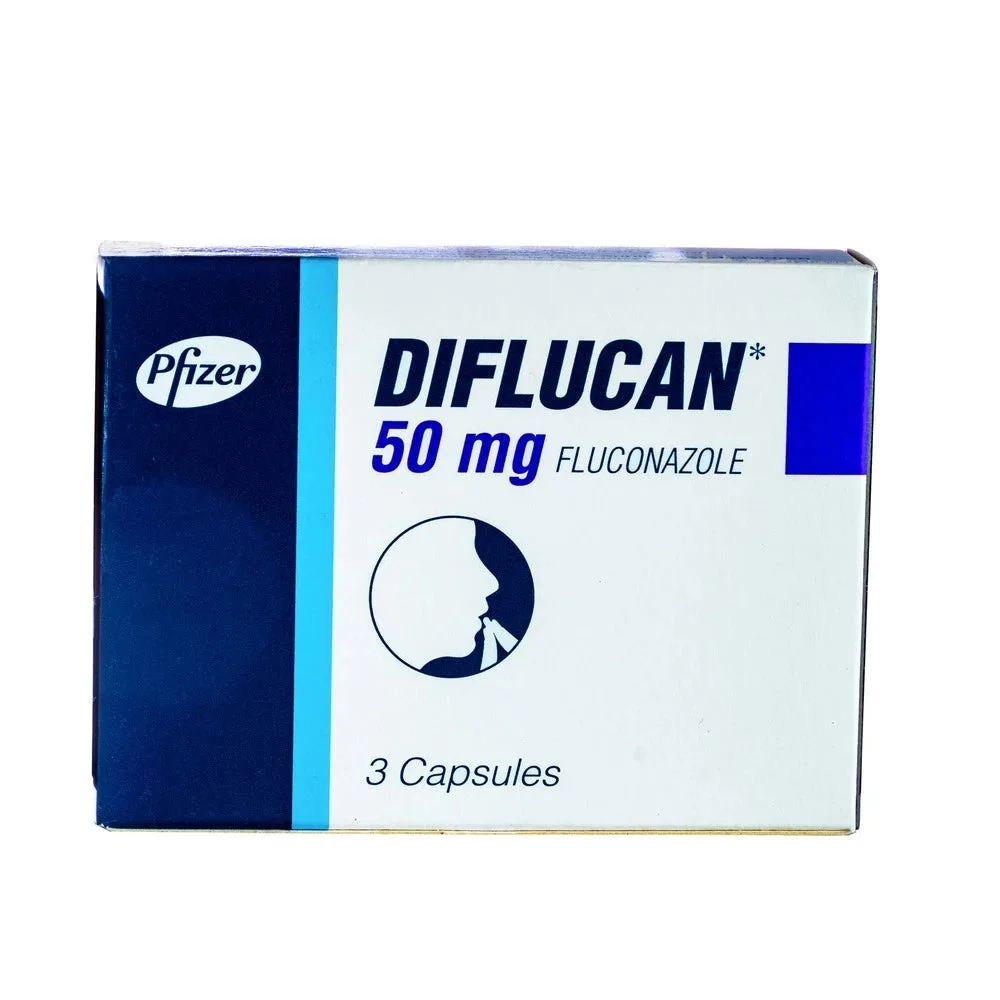 | Pfizer | 50mg | Capsule | 04-1426 |
| Emzor Fluconazole | Emzor | 200mg | Capsule | A11-1008 |
| Eden Fluconazole | Eden U-K Pharm Ltd | 150mg | Capsule | C4-0072 |
| Flucostat IV | Fidson Healthcare | 200mg/100ml | Infusion | A11-0245 |
| Zorflucan-1 | Emzor | 150mg | Capsule | A11-100119 |
Fluconazole Price in Nigeria
As of October 2026, Fluconazole tablets sell for about ₦2,133 per tablet online in Nigeria (packs ₦2,190–₦7,340; Diflucan) at three online pharmacies. The online price is roughly unchanged since July 2026. That figure is for Diflucan; 46 other fluconazole brands are NAFDAC-registered and generic versions usually cost less. Open-market prices (e.g. Idumota, Ogbogwu) are often lower.
Online retail (sampled)
₦3,170 for 7 tablets
₦7,340 for 3 tablets
Same 50mg Fluconazole — 5.4× the price, tablet for tablet.
median ₦3,700 · 6 listings
Better valueKent Pharma Fluconazole 50mg x7(HealthPlus)
₦3,170₦453 per tabletCosts moreDiflucan 50mg x3(HealthPlus)
₦7,340₦2,447 per tablet6 listings across HealthPlus + MedPlus + Supermart.ng — brands and pack sizes vary · October 2026.
Unchanged since July 2026.
Fluconazole price by brand
Each brand's own listings, as its page states them — the range above spans every brand and pack size.
- Diflucan price₦6,400–₦7,340· 2 listings
How to Verify Your Fluconazole is Genuine
- 1Check the NAFDAC registration number on the pack. In our October 2026 copy of the register Diflucan 50 mg (04-1426), Emzor Fluconazole 200 mg (A11-1008), Eden Fluconazole 150 mg (C4-0072) and Flucostat IV (A11-0245) are Active; Zorflucan-1 (A11-100119) is recorded Inactive
- 2Enter the number in our free NAFDAC checker and confirm the product name, strength and holder match the pack
- 3Purchase from licensed pharmacies — fluconazole is a prescription antifungal and should ideally be dispensed by a pharmacist who can advise on correct use
- 4For Diflucan (Pfizer), check for the distinctive blue and white capsule appearance, clear embossing, and consistent packaging quality
- 5Inspect the capsules for uniform colour, size, and markings. Reject any that appear damaged, discoloured, or have an unusual odour
- 6Be cautious of unusually cheap products — if fluconazole 150mg costs far less than other pharmacies charge, verify the source and NAFDAC registration before use
Where to Buy
Buying Fluconazole wholesale, by the carton
Cartons of fluconazole are bought at Nigeria's open drug markets: Idumota Market in Lagos, Ariaria Market in Aba, Ogbogwu Market in Onitsha and Sabon Gari Market in Kano. Each guide says where the market is and how to buy there safely; where we list sellers, they are named.
- Idumota Market, Lagos · wholesale sellers in Idumota Market
- Ariaria Market, Aba
- Ogbogwu Market, Onitsha
- Sabon Gari Market, Kano
No shop we list has Fluconazole on its confirmed product list yet — the market guides still tell you where the trade happens and how to buy there safely.
Which one are you?
I'm buying fluconazole
Tell us what you need and the quantity, and we'll connect you with a verified, NAFDAC-registered source. Free, no obligation.
I sell fluconazole
Get a free page where buyers look for them: your products, your number, how to find your shop. Independent of NAFDAC and government. Nothing goes live until you have seen it and approved it. Why list? →
Wherever you buy, buy only from licensed pharmacies and verified distributors — not roadside vendors — and verify the pack's NAFDAC registration before you pay. Buying Fluconazole in bulk or for resale? See how to buy medicines in bulk in Nigeria safely.
Need Fluconazole in bulk, or can't find it near you?
Tell us what you need and we'll connect you with a verified, NAFDAC-registered source.
What is Fluconazole?
In Nigeria, fluconazole is best known for treating vaginal candidiasis (yeast infections), which is extremely common. The warm, humid climate across much of Nigeria, combined with the widespread use of antibiotics (which disrupt the normal vaginal flora), means that vaginal yeast infections are one of the most frequent reasons women visit pharmacies. For uncomplicated vaginal candidiasis, a single 150mg capsule of fluconazole often resolves the infection — making it one of the most convenient treatments available. However, fluconazole's importance extends far beyond vaginal yeast infections. It is a lifesaving drug for HIV patients with cryptococcal meningitis, the most common cause of meningitis in people living with HIV in Africa and a leading killer of AIDS patients in Nigeria.
Fluconazole is available in Nigeria under Pfizer's original Diflucan and under dozens of generics. Our October 2026 copy of the NAFDAC register lists 102 fluconazole products, 47 of them with Active registrations — Emzor's 200 mg and 50 mg capsules (A11-1008, A11-0985), Eden's 150 mg capsule (C4-0072), Fidson's Flucostat infusion for hospital use (A11-0245) and many Indian-made 150 mg and 200 mg capsules; Emzor's single-dose Zorflucan-1 (A11-100119) is recorded Inactive. Funzela, Aspen's brand familiar from older prescriptions, does not appear in our copy. Generic capsules cost far less than Diflucan. The 150 mg capsule is the strength most often dispensed for vaginal and superficial candidiasis; 200 mg and above are for more serious infections, including the cryptococcal meningitis that fluconazole treats and prevents in people living with HIV.
What is Fluconazole used for?
In Nigeria, Fluconazole is commonly used for:
- Vaginal candidiasis (vaginal yeast infection) — the most common reason fluconazole is purchased in Nigeria; a single 150mg dose is often curative
- Oropharyngeal candidiasis (oral thrush) — extremely common in HIV patients and in patients who have used antibiotics or inhaled corticosteroids
- Oesophageal candidiasis — a serious fungal infection of the food pipe, typically seen in advanced HIV/AIDS
- Cryptococcal meningitis — fluconazole is used for both treatment (usually after initial amphotericin B) and long-term maintenance therapy to prevent relapse in HIV patients
- Systemic candidiasis (candidaemia) — serious bloodstream fungal infection in hospitalised patients
- Dermatophyte infections — tinea corporis (ringworm), tinea pedis (athlete's foot), tinea cruris (jock itch) when topical treatment is insufficient
- Prophylaxis against fungal infections in immunocompromised patients, including those undergoing chemotherapy or organ transplantation
- Candidal balanitis (fungal infection of the male foreskin/glans)
Dosage
IMPORTANT
Always follow your doctor's or pharmacist's instructions. The information below is for general reference only.
Adults
For vaginal candidiasis: a single dose of 150mg. For recurrent vaginal candidiasis (4 or more episodes per year): 150mg every 72 hours for 3 doses (days 1, 4, and 7), then 150mg once weekly for 6 months. For oropharyngeal thrush: 200mg on the first day, then 100mg to 200mg once daily for 7 to 14 days. For oesophageal candidiasis: 200mg to 400mg once daily for 14 to 21 days. For cryptococcal meningitis maintenance: 200mg once daily following initial treatment with amphotericin B. Take fluconazole at the same time each day, with or without food.
Children
For oropharyngeal candidiasis: 3 to 6mg per kilogram on the first day, then 3mg per kilogram once daily for at least 7 to 14 days. For systemic candidiasis: 6 to 12mg per kilogram per day. Maximum daily dose in children should not exceed 400mg. Fluconazole is available as an oral suspension for children. For neonates: fluconazole clearance is slower, and doses should be given every 72 hours in the first 2 weeks of life, then every 48 hours until 4 weeks of age. Paediatric dosing should be determined by a doctor.
Elderly
No specific dose adjustment is needed for elderly patients with normal kidney function. However, since kidney function declines with age, dose reduction may be necessary in elderly patients with reduced renal function. The dose should be adjusted based on creatinine clearance.
Fluconazole can be taken with or without food as absorption is not significantly affected. For a single dose for vaginal candidiasis, no special precautions are needed. For longer courses, ensure adequate hydration. If you are prescribed fluconazole for cryptococcal meningitis maintenance, do NOT stop the medication without your doctor's approval — stopping too early can result in a life-threatening relapse. Report any signs of liver problems (yellowing of the skin or eyes, dark urine, persistent nausea) to your doctor promptly.
Side Effects
General information for a reader holding a pack, not a substitute for a doctor or pharmacist. If something on the serious list is happening, seek care now.
Common side effects
- •Headache
- •Nausea and abdominal pain
- •Diarrhoea
- •Skin rash — usually mild, but stop the drug and see a doctor if it progresses
- •Elevated liver enzymes — usually detected through blood tests and typically reversible
Serious side effects — seek medical help immediately
- Liver toxicity (hepatotoxicity) — rare but potentially serious; manifests as jaundice (yellow skin/eyes), dark urine, severe fatigue, and right upper abdominal pain. More likely with prolonged high-dose therapy
- Severe skin reactions — Stevens-Johnson syndrome and toxic epidermal necrolysis are rare but life-threatening; more common in HIV patients and those with other serious medical conditions
- QT prolongation — can cause dangerous heart rhythm abnormalities, particularly when combined with other QT-prolonging drugs
- Severe allergic reaction (anaphylaxis) — rare; seek emergency care for facial swelling or difficulty breathing
- Adrenal insufficiency — rare, reported with very high doses or prolonged use
When to see a doctor
See a doctor promptly if you develop yellowing of the skin or eyes, dark urine, persistent nausea or vomiting, severe abdominal pain, or unusual fatigue while taking fluconazole — these may indicate liver damage. Stop fluconazole immediately and seek emergency care if you develop a skin rash that spreads or blisters, mouth sores, difficulty breathing, or swelling of the face or throat. If you are HIV-positive and taking fluconazole for cryptococcal meningitis, report any worsening headache, neck stiffness, or vision changes to your doctor immediately as these may indicate treatment failure or immune reconstitution inflammatory syndrome (IRIS).
Warnings & Precautions
General information for a reader holding a pack, not a substitute for a doctor or pharmacist. If something on the serious list is happening, seek care now.
Do not take Fluconazole if you have:
- Known allergy to fluconazole or other azole antifungals (ketoconazole, itraconazole, voriconazole)
- Concurrent use with terfenadine, astemizole, cisapride, pimozide, or quinidine at fluconazole doses of 400mg or more — risk of fatal cardiac arrhythmias
- Concurrent use with erythromycin and fluconazole due to cardiac risk
- Severe liver disease — fluconazole should be used with extreme caution and only when necessary
Drug interactions
- •Warfarin — fluconazole significantly increases the anticoagulant effect of warfarin by inhibiting its metabolism; INR must be closely monitored and warfarin dose reduced accordingly
- •Oral hypoglycaemics (glibenclamide, glipizide) — fluconazole can increase their blood sugar-lowering effect, causing hypoglycaemia; blood sugar should be monitored closely
- •Phenytoin — fluconazole increases phenytoin levels, risking toxicity
- •Rifampicin — significantly reduces fluconazole levels, potentially making it ineffective; may need to increase fluconazole dose. This is particularly important in Nigeria where TB-HIV co-infection is common
- •Ciclosporin and tacrolimus (immunosuppressants) — fluconazole increases their levels, requiring dose adjustments and monitoring
- •Statins (atorvastatin, simvastatin) — fluconazole can increase statin levels, increasing the risk of muscle damage (rhabdomyolysis)
- •Certain antiretrovirals (efavirenz, nevirapine) — complex interactions relevant for HIV patients in Nigeria; consult a doctor or pharmacist
Pregnancy & Breastfeeding
A single 150mg dose of fluconazole for vaginal candidiasis is generally considered low risk during pregnancy, though some guidelines recommend topical antifungals (such as clotrimazole) as first-line treatment during pregnancy. However, high doses of fluconazole (400mg or more daily) and prolonged courses are CONTRAINDICATED in pregnancy due to reports of birth defects including skeletal and craniofacial abnormalities. Pregnant women with serious fungal infections requiring high-dose fluconazole should discuss the risks and benefits with their doctor. Fluconazole is excreted in breast milk at concentrations similar to blood levels. A single 150mg dose is generally considered compatible with breastfeeding, but prolonged courses require medical guidance.
Related Resources for Fluconazole
Guides, articles, and tools related to Fluconazole and other antifungals medicines in Nigeria.
Frequently Asked Questions
Sources
- •NAFDAC Greenbook — the official database of all products registered with Nigeria's National Agency for Food and Drug Administration and Control. Brand-level NAFDAC numbers for Fluconazole on this page were cross-referenced against the Greenbook.
- •WHO Model List of Essential Medicines — Fluconazole is included in the WHO's list of essential medicines, meaning it is considered essential for basic healthcare needs.
- •British National Formulary (BNF) dosing and interaction guidance for Fluconazole.
- •Nigerian Standard Treatment Guidelines (Federal Ministry of Health).
Daily puzzle: Meddle — pair five brands with their medicines. New game at midnight.