Metronidazole, universally known as 'Flagyl' across Nigeria, is one of the most commonly used medications in the country. It is a nitroimidazole antibiotic that works against anaerobic bacteria (bacteria that thrive without oxygen) and protozoa (parasitic organisms). Metronidazole enters the bacterial or parasitic cell, where it is converted into active compounds that damage the organism's DNA, ultimately killing it. This dual action against both bacteria and parasites makes it uniquely versatile, and it is a staple medication in virtually every pharmacy, patent medicine store, and hospital in Nigeria.
In the NAFDAC register
115 registered products
from 71 registration holders
What it costs online
about ₦2,645tablets
median of 4 listings
Also sampled: syrup (6 listings, ₦860–₦4,375) · injection (1 listing, ₦900)
≈₦31 per ml (syrup/suspension)
0% since July 2026 · like-for-like
Sampled from 11 listings across HealthPlus and MedPlus and Supermart.ng · October 2026
Full price breakdown →Brands of Metronidazole in Nigeria
Comes as
- Tablet200 mg· 17 makers400 mg· 12 makers
- Suspension200 mg/5 mL· 15 makers
- Solution for infusion500 mg/100 mL· 7 makers
- Injection500 mg/100 mL· 3 makers
Those 115 products from 71 registration holders, counted in our October 2026 copy of the register, include combination products and older listings; below are the most common brands.
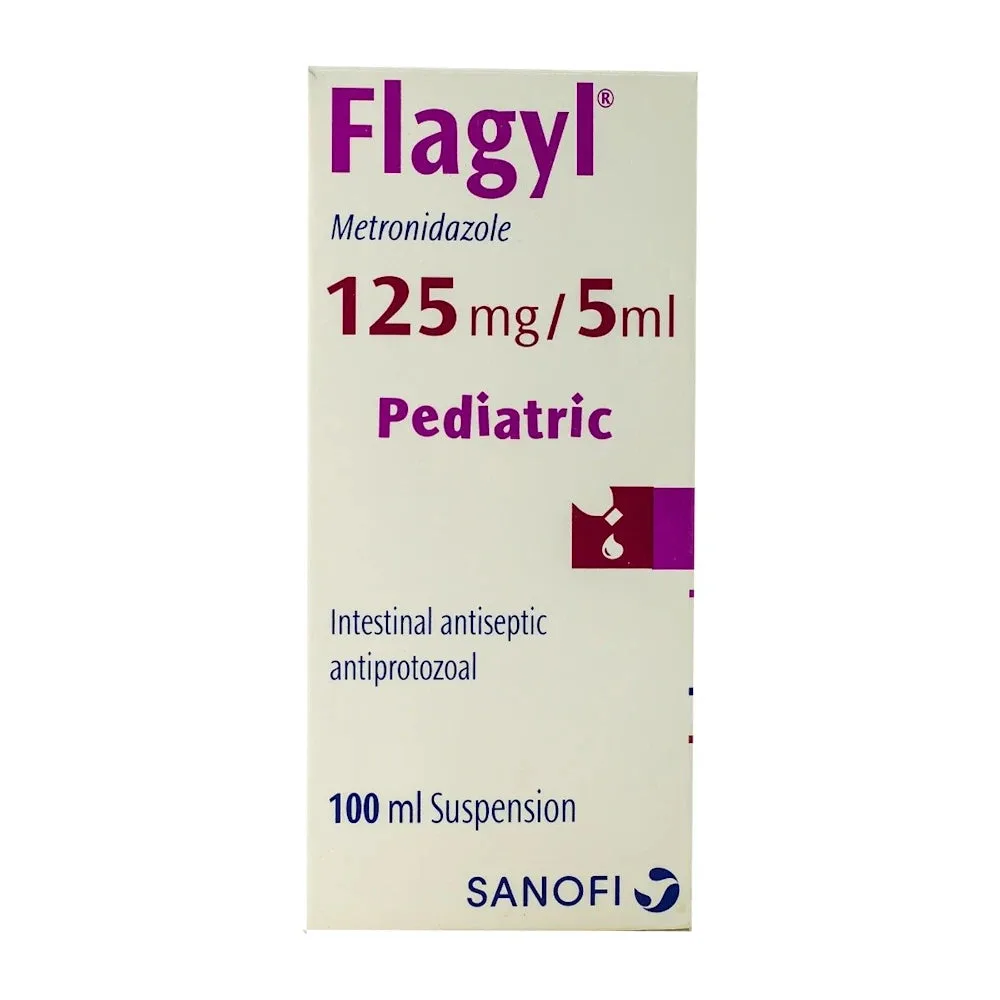
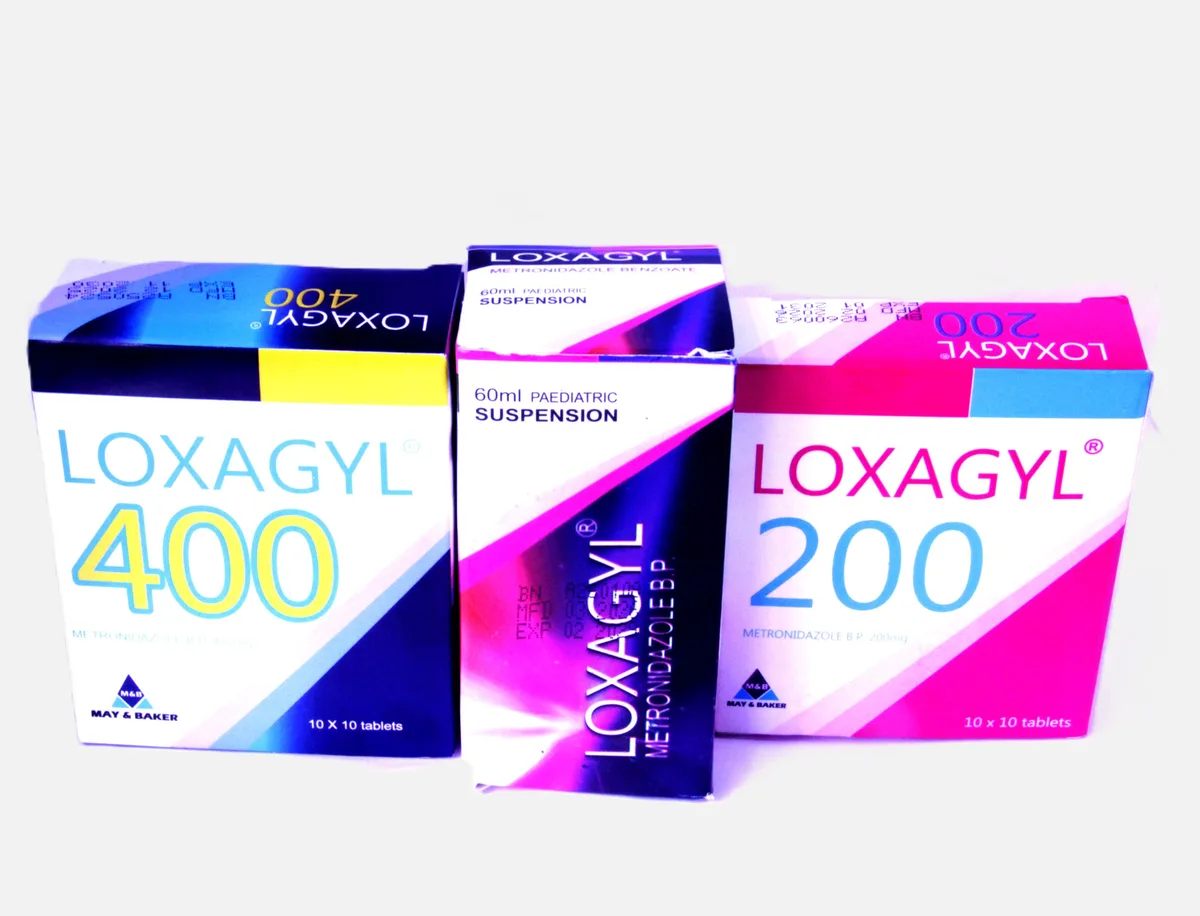


- 125mg/5mL, 200mg, 250mg, 400mg, 200mg/5mL · Suspension · A11-1009
| Brand Name | Manufacturer | Strength | Form | NAFDAC Reg. No. |
|---|---|---|---|---|
| Sanofi | 200mg, 400mg | Tablet | |
| May & Baker | 200mg, 400mg | Tablet | 04-0283 |
| Sanofi | 125mg/5ml | Suspension | A4-3947 |
| Dizpharm Nigeria Limited | 200mg | Tablet | 04-2653 |
| Emgyl | Emzor Pharmaceutical Industries Limited | 125mg/5mL, 200mg, 250mg, 400mg, 200mg/5mL | Suspension | A11-1009 |
| Metrone | Fidson Healthcare PLC | 200mg, 500mg, 200mg/5mL | Tablet | 04-9620 |
| Unigyl | Unique Pharmaceuticals | 200mg, 400mg, 200mg/5ml, 500mg/100ml | Tablet | 04-8426 |
Metronidazole Price in Nigeria
As of October 2026, Metronidazole sells for about ₦2,645 for tablets online in Nigeria (Emgyl, Loxagyl) at three online pharmacies; syrup ₦860–₦4,375, injection ₦900. The online price is roughly unchanged since July 2026. Open-market prices (e.g. Idumota, Ogbogwu) are often lower.
Online retail (sampled)
₦860 for 60ml
₦4,375 for 60ml
Same 200mg/5ml Metronidazole — 5.1× the price for an identical pack, so the difference is the brand.
Syrup/Suspension
median ₦2,163 · 6 listings
CheapestMetrone Metronidazole 200mg/5ml 60ml(HealthPlus)
₦860PriciestUnigyl Paediatric Suspension 200 mg/5ml 60 ml(Supermart.ng)
₦4,375Tablet/Capsule
₦2,170 – ₦3,170 · 4 listings
Injection
median ₦900 · 1 listing
11 listings across HealthPlus + MedPlus + Supermart.ng · October 2026.
Unchanged since July 2026.
Metronidazole price by brand
Each brand's own listings, as its page states them — the range above spans every brand and pack size.
- Emgyl pricefrom ₦930· 4 listings
- Flagyl price₦2,450–₦3,080· 2 listings
- Loxagyl price₦2,590–₦2,700· 2 listings
- Unigyl pricefrom ₦900· 2 listings
- Metrone price₦860· 1 listing
How to Verify Your Metronidazole is Genuine
- 1Check for a valid NAFDAC registration number on the packaging of all metronidazole products.
- 2Use the NAFDAC Mobile Authentication Service (MAS): scratch the verification panel and send the code to 38353 to verify the product.
- 3Purchase from registered pharmacies and licensed patent medicine stores. While metronidazole is widely available even at market stalls, buying from verified outlets reduces the risk of substandard products.
- 4Check the packaging for clear printing, correct spelling, intact seals, and proper batch number and expiry date information.
- 5Compare packaging with known genuine products — counterfeit Flagyl has been seized by NAFDAC in the past.
- 6If a pack of metronidazole costs far below what other pharmacies charge, be cautious about its quality and source.
Where to Buy
Listed sellers stocking Metronidazole brands
- AHAWNET HEALTH SOLUTIONSIdumota Market, LagosLoxagylUnigylView shop & contact
- KHKookah Healthcare LimitedNsukka, EnuguCaregylView shop & contact
- NPNakesemani Patent Medicine StoreYola, AdamawaFlagylView shop & contact
By state:Abia1Adamawa1Anambra1Benue1Ebonyi1Enugu1Imo1Kogi1Lagos1Ogun1
As stated by each shop — not live inventory. Confirm availability with the shop, and verify the NAFDAC registration on any pack before you buy.
By market: Where to buy metronidazole in Idumota Market, Lagos (1 seller)
Buying Metronidazole wholesale, by the carton
Cartons of metronidazole are bought at Nigeria's open drug markets: Idumota Market in Lagos, Ariaria Market in Aba, Ogbogwu Market in Onitsha and Sabon Gari Market in Kano. Each guide says where the market is and how to buy there safely; where we list sellers, they are named.
- Idumota Market, Lagos · wholesale sellers in Idumota Market — 1 listed seller here carries Metronidazole brands
- Ariaria Market, Aba
- Ogbogwu Market, Onitsha
- Sabon Gari Market, Kano
Which one are you?
I'm buying metronidazole
Tell us what you need and the quantity, and we'll connect you with a verified, NAFDAC-registered source. Free, no obligation.
I sell metronidazole
Get a free page where buyers look for them: your products, your number, how to find your shop. Independent of NAFDAC and government. Nothing goes live until you have seen it and approved it. Why list? →
Wherever you buy, buy only from licensed pharmacies and verified distributors — not roadside vendors — and verify the pack's NAFDAC registration before you pay. Buying Metronidazole in bulk or for resale? See how to buy medicines in bulk in Nigeria safely.
Need Metronidazole in bulk, or can't find it near you?
Tell us what you need and we'll connect you with a verified, NAFDAC-registered source.
What is Metronidazole?
In Nigerian healthcare and everyday language, 'Flagyl' has become a household name — so widely recognised that many people use it as a general term for any medication taken for stomach problems, diarrhoea, or 'running stomach.' It is prescribed and sold for a huge range of conditions, from amoebic dysentery and giardiasis to dental infections, vaginal infections, and as part of combination therapy for peptic ulcer disease caused by Helicobacter pylori. The 400mg tablet is the most commonly used form, though it is also available as a suspension for children, as suppositories, and as an intravenous injection for hospital use.
While metronidazole is relatively safe and effective when used correctly, its widespread availability as an over-the-counter medication in Nigeria means it is frequently misused. Many people take it for any type of diarrhoea or stomach discomfort, even though it is not effective against viral diarrhoea or non-infective causes of abdominal pain. The drug is also notable for its strong interaction with alcohol — consuming any amount of alcohol while taking metronidazole or for at least 48 hours afterwards can cause severe nausea, vomiting, flushing, and rapid heartbeat (disulfiram-like reaction). This is one of the most important warnings that every patient in Nigeria should be aware of before taking this medication.
What is Metronidazole used for?
In Nigeria, Metronidazole is commonly used for:
- Amoebic dysentery (intestinal amoebiasis) — one of the most common reasons for use in Nigeria
- Amoebic liver abscess
- Giardiasis (Giardia lamblia infection) — common in areas with poor water quality
- Trichomoniasis — a sexually transmitted infection
- Bacterial vaginosis
- Anaerobic bacterial infections — including intra-abdominal infections, pelvic infections, and wound infections
- Dental infections and periodontal abscesses — often used in combination with amoxicillin
- Helicobacter pylori eradication — as part of triple therapy for peptic ulcer disease (with amoxicillin and a proton pump inhibitor)
- Pseudomembranous colitis (Clostridium difficile infection)
- Surgical prophylaxis — particularly for abdominal and gynaecological surgeries
Dosage
IMPORTANT
Always follow your doctor's or pharmacist's instructions. The information below is for general reference only.
Adults
The standard adult dose varies by condition. For amoebic dysentery: 400mg to 800mg three times daily for 5 to 10 days. For giardiasis: 400mg three times daily for 5 days, or a single 2g dose. For trichomoniasis and bacterial vaginosis: 400mg twice daily for 7 days, or a single 2g dose. For anaerobic infections: 400mg three times daily for 7 to 10 days. For dental infections: 200mg to 400mg three times daily for 3 to 7 days. For H. pylori eradication: 400mg twice daily for 7 to 14 days (as part of combination therapy). Tablets should be taken with or after food to minimise stomach irritation.
Children
Paediatric dosage is based on body weight. The usual dose is 7.5mg per kilogram three times daily. For amoebic dysentery in children, the dose may be increased. Metronidazole suspension (200mg/5ml) is available for children who cannot swallow tablets. Always use the measuring device provided — do not estimate with household spoons. Shake the suspension well before each dose.
Elderly
Elderly patients generally receive the same doses as younger adults for short courses. However, for prolonged treatment, lower doses or longer intervals between doses may be considered, especially in those with liver impairment, as metronidazole is primarily metabolised by the liver.
STRICTLY AVOID ALCOHOL during treatment and for at least 48 hours after completing the course. Taking alcohol with metronidazole causes a severe disulfiram-like reaction with intense nausea, vomiting, abdominal cramps, and flushing. Swallow tablets with a full glass of water. The metallic taste in the mouth is a common and harmless side effect — it will go away after you finish the course.
Side Effects
General information for a reader holding a pack, not a substitute for a doctor or pharmacist. If something on the serious list is happening, seek care now.
Common side effects
- •Metallic or bitter taste in the mouth — this is the most characteristic side effect and is experienced by most patients
- •Nausea and loss of appetite
- •Stomach pain and cramping
- •Diarrhoea
- •Headache and dizziness
- •Dark or reddish-brown discolouration of urine — this is harmless and caused by a metabolite of the drug
Serious side effects — seek medical help immediately
- Peripheral neuropathy — numbness, tingling, or pain in the hands and feet, especially with prolonged use or high doses. This may be irreversible if the drug is not stopped promptly.
- Central nervous system effects — seizures, confusion, encephalopathy (brain dysfunction), particularly with high doses or prolonged courses
- Severe disulfiram-like reaction with alcohol — intense nausea, vomiting, flushing, rapid heartbeat, low blood pressure
- Blood disorders — very rare, but includes neutropenia (low white blood cell count)
- Severe allergic reaction — skin rash, swelling, difficulty breathing
When to see a doctor
Seek medical attention if you experience numbness or tingling in your hands or feet (this may indicate nerve damage that could be permanent if the drug is continued), seizures, severe confusion, persistent or worsening diarrhoea, or signs of a severe allergic reaction such as swelling or difficulty breathing. If you accidentally consume alcohol while taking metronidazole and develop severe vomiting, chest pain, or difficulty breathing, go to the nearest hospital immediately. In Nigeria, the emergency units of general hospitals and teaching hospitals can manage these reactions.
Warnings & Precautions
General information for a reader holding a pack, not a substitute for a doctor or pharmacist. If something on the serious list is happening, seek care now.
Do not take Metronidazole if you have:
- Known allergy to metronidazole or other nitroimidazole drugs (tinidazole, secnidazole)
- Active neurological disorders, especially peripheral neuropathy
- First trimester of pregnancy (relative contraindication — see pregnancy section)
- Severe liver disease (metronidazole clearance is significantly reduced)
Drug interactions
- •Alcohol — causes a severe disulfiram-like reaction with nausea, vomiting, flushing, and rapid heartbeat. Avoid completely during treatment and for 48 hours after the last dose.
- •Warfarin — metronidazole significantly enhances the anticoagulant effect. INR must be monitored closely and warfarin dose adjusted.
- •Lithium — metronidazole can increase lithium levels to toxic concentrations
- •Phenytoin and phenobarbital — these drugs speed up metronidazole metabolism, potentially reducing its effectiveness
- •Disulfiram — do not use together; risk of psychotic reactions and confusion
- •Busulfan — metronidazole can increase busulfan toxicity
- •5-Fluorouracil — metronidazole can reduce clearance and increase toxicity
Pregnancy & Breastfeeding
Metronidazole is generally avoided during the first trimester of pregnancy due to theoretical concerns about effects on the developing foetus, although large studies have not conclusively shown harm. In the second and third trimesters, it may be used when clearly needed — for example, for symptomatic trichomoniasis or amoebic dysentery that cannot wait until after delivery. Metronidazole passes into breast milk and may give it a bitter taste, potentially causing the baby to refuse feeds temporarily. Some guidelines recommend expressing and discarding breast milk during treatment and for 24 hours after the last dose. Always consult your doctor or midwife before using metronidazole during pregnancy or while breastfeeding.
Used for these conditions
Related Resources for Metronidazole
Guides, articles, and tools related to Metronidazole and other antibiotics medicines in Nigeria.
Frequently Asked Questions
Sources
- •NAFDAC Greenbook — the official database of all products registered with Nigeria's National Agency for Food and Drug Administration and Control. Brand-level NAFDAC numbers for Metronidazole on this page were cross-referenced against the Greenbook.
- •WHO Model List of Essential Medicines — Metronidazole is included in the WHO's list of essential medicines, meaning it is considered essential for basic healthcare needs.
- •British National Formulary (BNF) dosing and interaction guidance for Metronidazole.
- •Nigerian Standard Treatment Guidelines (Federal Ministry of Health).
Daily puzzle: Meddle — pair five brands with their medicines. New game at midnight.