Augmentin (amoxicillin-clavulanate) is one of the most popular and widely prescribed antibiotics in Nigeria. It combines two active ingredients: amoxicillin, a penicillin-type antibiotic, and clavulanic acid, a beta-lactamase inhibitor. Many bacteria have developed the ability to produce enzymes called beta-lactamases that can break down and inactivate amoxicillin before it can work. Clavulanic acid blocks these enzymes, allowing amoxicillin to remain effective against bacteria that would otherwise be resistant to it. This combination makes Augmentin more powerful than plain amoxicillin against a wider range of infections.
In the NAFDAC register
248 registered products
from 117 registration holders
What it costs online
about ₦13,700tablets
median of 6 listings
Also sampled: syrup (3 listings, ₦6,770–₦8,200)
≈₦979 per tablet (tablet/capsule)
1% since July 2026 · like-for-like
Sampled from 9 listings across HealthPlus and MedPlus · October 2026
Full price breakdown →Brands of Amoxicillin-Clavulanate in Nigeria
Comes as
- TabletAmoxicillin 500 mg + Clavulanic Acid 125 mg· 28 makersAmoxicillin 875 mg + Clavulanic Acid 125 mg· 11 makersAmoxicillin 250 mg + Clavulanic Acid 125 mg· 7 makers
- Powder for injectionAmoxicillin 1000 mg + Clavulanic Acid 200 mg· 11 makers
- InjectionAmoxicillin 1000 mg + Clavulanic Acid 200 mg· 8 makers
- Powder for suspensionAmoxicillin 200 mg/5 mL + Clavulanic Acid 28.5 mg/5 mL· 5 makersAmoxicillin 200 mg + Clavulanic Acid 28.5 mg· 3 makers
Those 248 products from 117 registration holders, counted in our October 2026 copy of the register, include combination products and older listings; below are the most common brands.
- 1000mg (875mg amoxicillin + 125mg clavulanate) · Tablet · A4-0668
- 457mg/5mL (400mg amoxicillin + 57mg clavulanate per 5mL) · Suspension · A4-1667
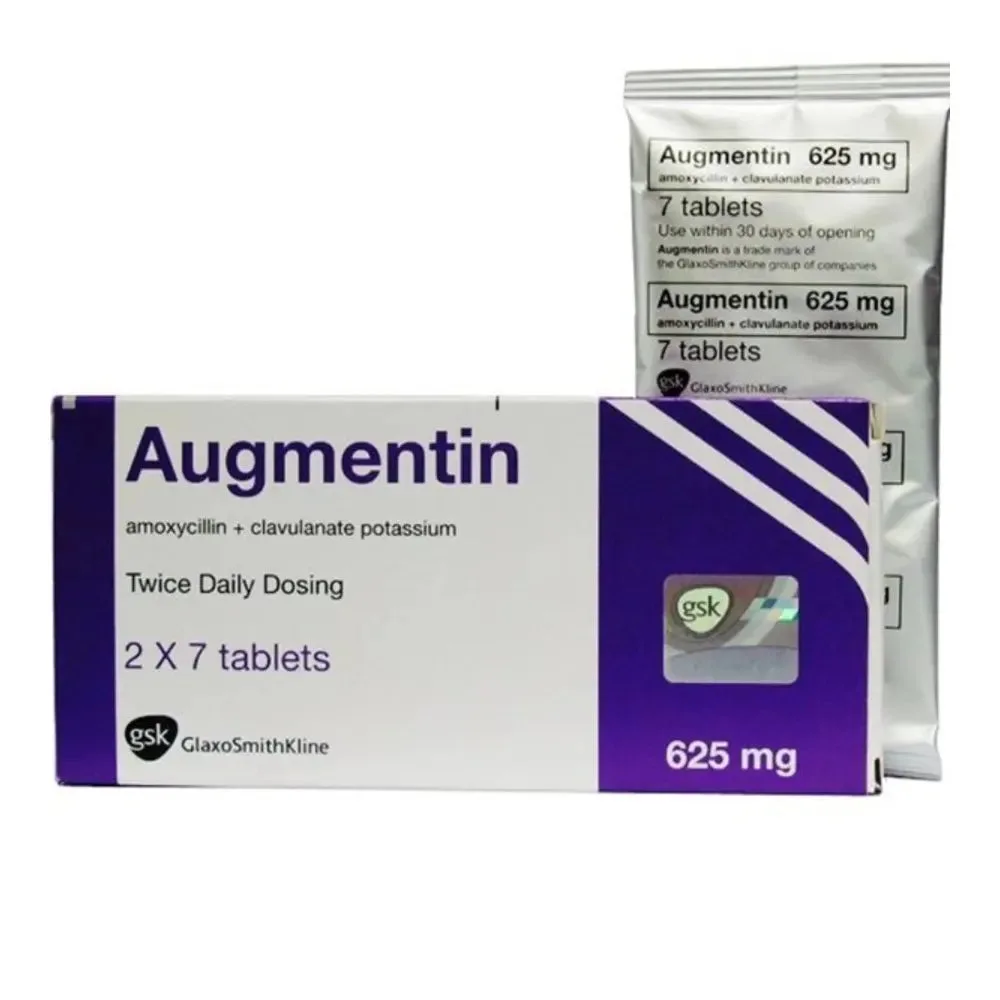
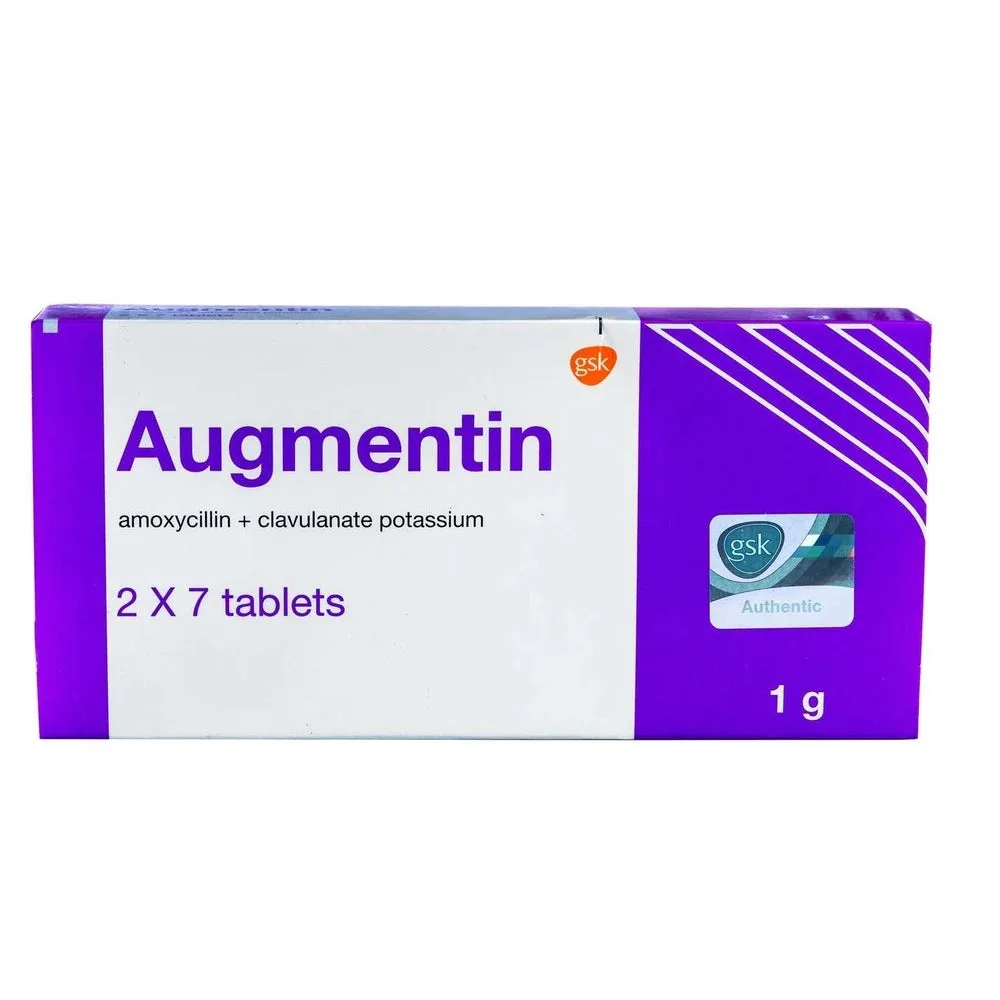
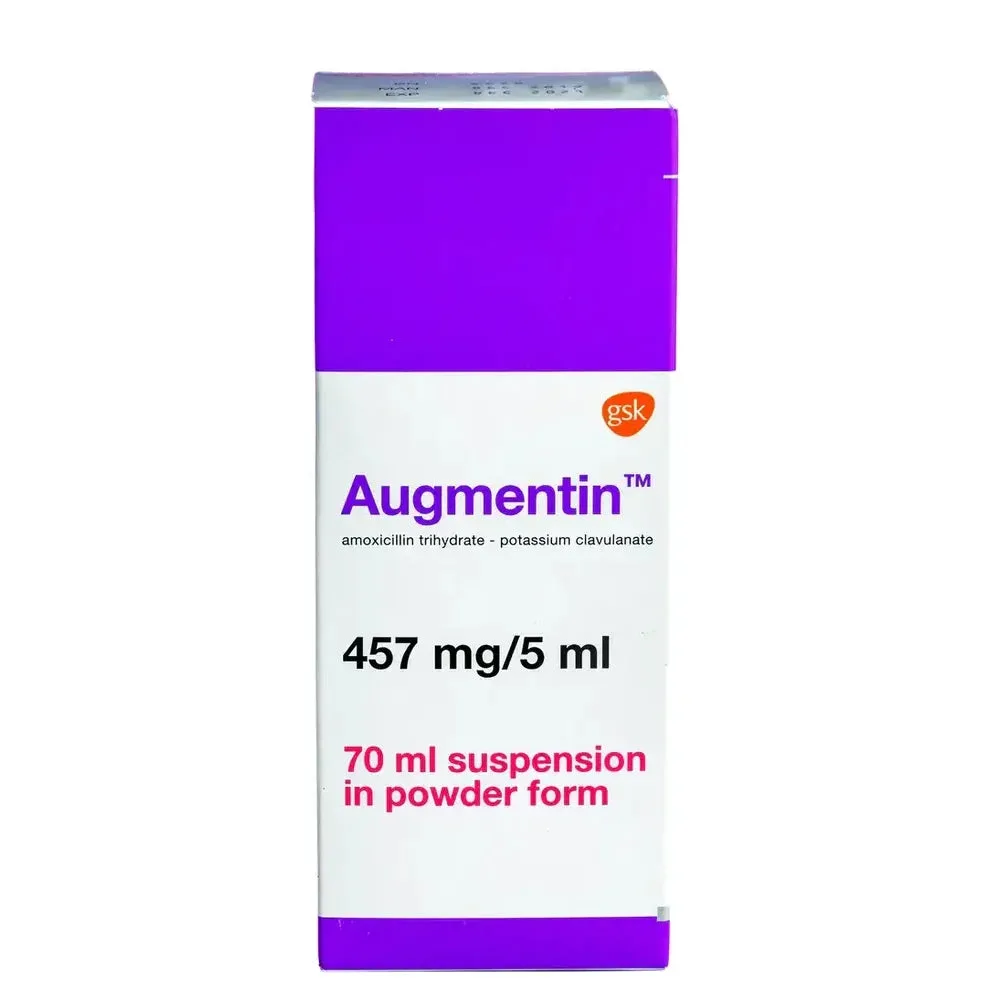
- 875mg;125mg, 250mg;125mg, 500mg;125mg, 200mg/5mL;28.5mg/5mL · Tablet · B4-6857
| Brand Name | Manufacturer | Strength | Form | NAFDAC Reg. No. |
|---|---|---|---|---|
| Fleming 1000 | Sanofi-Aventis Nigeria Limited | 1000mg (875mg amoxicillin + 125mg clavulanate) | Tablet | A4-0668 |
| Fleming 457 Suspension | Sanofi-Aventis Nigeria Limited | 457mg/5mL (400mg amoxicillin + 57mg clavulanate per 5mL) | Suspension | A4-1667 |
| Augmentin 375 | GlaxoSmithKline | 375mg (250mg amoxicillin + 125mg clavulanate) | Tablet | 04-2466 |
| GlaxoSmithKline | 625mg (500mg amoxicillin + 125mg clavulanate) | Tablet | 04-1928 |
| GlaxoSmithKline | 1g (875mg amoxicillin + 125mg clavulanate) | Tablet | 04-8655 |
| Clavopil | Appealing Healthcare & Pharmacy | 625mg | Tablet | C4-1599 |
| Clavumox | Ranbaxy | 625mg | Tablet | |
| GSK | 228mg/5ml, 457mg/5ml | Suspension | B4-0052 |
| Aquaclav | Pinnacle Health Pharmaceutical & Stores Ltd | 875mg;125mg, 250mg;125mg, 500mg;125mg, 200mg/5mL;28.5mg/5mL | Tablet | B4-6857 |
Amoxicillin-Clavulanate Price in Nigeria
As of October 2026, Amoxicillin-Clavulanate sells for about ₦13,700 for tablets online in Nigeria (Augmentin, Aquaclav) at HealthPlus and MedPlus; syrup ₦6,770–₦8,200. The online price is up 1% since July 2026. Open-market prices (e.g. Idumota, Ogbogwu) are often lower.
Online retail (sampled)
₦4,040 for 14 tablets
₦15,890 for 14 tablets
Same 625mg Amoxicillin-Clavulanate — 3.9× the price for an identical pack, so the difference is the brand.
Tablet/Capsule
median ₦13,700 · 6 listings
CheapestAquaclav 625mg x14(HealthPlus)
₦4,040PriciestAugmentin (Amoxicillin/Clavulanic Acid) 625mg Tabs x 14(HealthPlus)
₦15,890Syrup/Suspension
₦6,770 – ₦8,200 · 3 listings · ≈₦115 per ml
9 listings across HealthPlus + MedPlus · October 2026.
Up 1% since July 2026.
Amoxicillin-Clavulanate price by brand
Each brand's own listings, as its page states them — the range above spans every brand and pack size.
- Aquaclav price₦4,040· 1 listing
- Fleming 1000 price₦14,000· 1 listing
- Fleming 457 Suspension price₦7,930· 1 listing
How to Verify Your Amoxicillin-Clavulanate is Genuine
- 1Check the NAFDAC registration number on the pack. In our October 2026 copy of the register Augmentin 375 (04-2466), Augmentin 625 (04-1928), Augmentin 1 g (04-8655) and Aquaclav 1 g (B4-6857) are Active; Augmentin ES suspension (B4-0052), Clavopil and the Fleming suspension are recorded Inactive and Fleming 1000 Expired — confirm those on the official Greenbook. Enter the number in our free NAFDAC checker and confirm the product name, strength and holder match the pack
- 2Check for a valid NAFDAC registration number on the packaging. Genuine Augmentin and its generic equivalents must be NAFDAC-registered.
- 3Scratch the authentication panel on the pack and send the code via SMS to 38353 (NAFDAC Mobile Authentication Service) to verify the product's authenticity.
- 4Purchase only from registered pharmacies. Avoid buying from open markets, bus parks, or unregistered vendors where the risk of counterfeit products is highest.
- 5Check the packaging carefully — fake products often have spelling errors, poor print quality, or incorrect colour shading compared to genuine products.
- 6Verify the expiry date and batch number. Cross-reference these with the manufacturer's records if in doubt.
- 7If the price is far below what other pharmacies charge for original Augmentin, exercise caution — it may be substandard or counterfeit.
Where to Buy
Buying Amoxicillin-Clavulanate wholesale, by the carton
Cartons of amoxicillin-clavulanate are bought at Nigeria's open drug markets: Idumota Market in Lagos, Ariaria Market in Aba, Ogbogwu Market in Onitsha and Sabon Gari Market in Kano. Each guide says where the market is and how to buy there safely; where we list sellers, they are named.
- Idumota Market, Lagos · wholesale sellers in Idumota Market
- Ariaria Market, Aba
- Ogbogwu Market, Onitsha
- Sabon Gari Market, Kano
No shop we list has Amoxicillin-Clavulanate on its confirmed product list yet — the market guides still tell you where the trade happens and how to buy there safely.
Which one are you?
I'm buying amoxicillin-clavulanate
Tell us what you need and the quantity, and we'll connect you with a verified, NAFDAC-registered source. Free, no obligation.
I sell amoxicillin-clavulanate
Get a free page where buyers look for them: your products, your number, how to find your shop. Independent of NAFDAC and government. Nothing goes live until you have seen it and approved it. Why list? →
Wherever you buy, buy only from licensed pharmacies and verified distributors — not roadside vendors — and verify the pack's NAFDAC registration before you pay. Buying Amoxicillin-Clavulanate in bulk or for resale? See how to buy medicines in bulk in Nigeria safely.
Need Amoxicillin-Clavulanate in bulk, or can't find it near you?
Tell us what you need and we'll connect you with a verified, NAFDAC-registered source.
What is Amoxicillin-Clavulanate?
In Nigeria, the brand name 'Augmentin' has become almost synonymous with the drug itself — many patients and even some healthcare workers simply refer to amoxicillin-clavulanate as 'Augmentin' regardless of the actual brand. It is available as tablets (375mg, 625mg, and 1g strengths), oral suspension for children, and as an injection for hospital use. The 625mg tablet is by far the most commonly dispensed strength in Nigerian pharmacies. Due to its broad-spectrum activity, Augmentin is frequently prescribed when a doctor suspects a resistant infection or when initial treatment with simpler antibiotics has failed.
While Augmentin is an extremely useful antibiotic, it is considerably more expensive than plain amoxicillin, which can be a significant consideration for many Nigerian patients. A course of original Augmentin can cost several times the price of plain amoxicillin, putting it out of reach for some families. This has unfortunately led to a thriving market in counterfeit and substandard Augmentin products. NAFDAC has repeatedly seized fake Augmentin across the country, and patients are strongly advised to verify their medication using the NAFDAC MAS (Mobile Authentication Service) before use.
Our October 2026 copy of the NAFDAC register lists 248 amoxicillin-clavulanate products, 89 of them with Active registrations. GSK's Augmentin 375 mg, 625 mg and 1 g tablets (04-2466, 04-1928, 04-8655) are Active; the Augmentin ES oral suspension (B4-0052) is recorded Inactive since December 2025. Sanofi's Fleming — the co-amoxiclav people type as 'leming 625' — has its 1000 mg tablet recorded Expired and its 457 mg/5 mL suspension Inactive in our copy, and Clavopil (C4-1599) is Inactive too. Pinnacle's Aquaclav 1 g (B4-6857) and a hundred other generics are Active, which is the point of this page: co-amoxiclav is not Augmentin, and the register holds many cheaper, current registrations of the same medicine.
What is Amoxicillin-Clavulanate used for?
In Nigeria, Amoxicillin-Clavulanate is commonly used for:
- Resistant bacterial infections that do not respond to plain amoxicillin
- Sinusitis (sinus infections) — acute and chronic
- Lower respiratory tract infections including community-acquired pneumonia and acute exacerbation of chronic bronchitis
- Urinary tract infections (UTIs), especially complicated UTIs
- Skin and soft tissue infections including wound infections and cellulitis
- Dental abscesses and periodontal infections
- Otitis media (ear infections) that fail first-line therapy
- Animal and human bite wound infections
- Intra-abdominal infections (in combination with other agents)
Dosage
IMPORTANT
Always follow your doctor's or pharmacist's instructions. The information below is for general reference only.
Adults
The standard adult dose is one 625mg tablet taken twice daily, or one 375mg tablet taken three times daily. For more severe infections, one 1g tablet taken twice daily may be prescribed. Tablets should be taken at the start of a meal to reduce stomach side effects and improve absorption. A typical course lasts 5 to 7 days, though your doctor may prescribe a longer course for certain infections. Always complete the full course as prescribed.
Children
Dosage for children is based on body weight and is calculated using the amoxicillin component. The usual dose is 25mg to 45mg per kilogram per day in two divided doses. Augmentin suspension is available in 228mg/5ml and 457mg/5ml strengths for children who cannot swallow tablets. Shake the suspension well before measuring each dose, and use the measuring device provided. The suspension should be stored in a refrigerator after reconstitution.
Elderly
Elderly patients generally receive the standard adult dose, but dosage adjustment may be necessary in patients with impaired kidney function. Liver function should also be monitored during prolonged courses, as elderly patients are more susceptible to cholestatic jaundice associated with amoxicillin-clavulanate.
Take Augmentin at the start of a meal to minimise stomach upset. If you experience persistent diarrhoea, contact your healthcare provider. Do not crush or chew the tablets — swallow whole with water. Space your doses evenly throughout the day (e.g., every 12 hours for twice-daily dosing). Store reconstituted suspension in the refrigerator and discard after 7 days.
Side Effects
General information for a reader holding a pack, not a substitute for a doctor or pharmacist. If something on the serious list is happening, seek care now.
Common side effects
- •Diarrhoea — more common with Augmentin than with plain amoxicillin due to the clavulanic acid component
- •Nausea and vomiting
- •Abdominal discomfort and bloating
- •Skin rash
- •Vaginal yeast infection (thrush) in women
Serious side effects — seek medical help immediately
- Severe allergic reaction (anaphylaxis) — difficulty breathing, swelling of the face and throat
- Cholestatic jaundice and liver damage — may appear during or shortly after treatment, more common in older patients and with prolonged use
- Stevens-Johnson syndrome — severe skin blistering and peeling
- Clostridium difficile-associated diarrhoea — severe, persistent watery or bloody diarrhoea
- Blood disorders — unusual bruising, bleeding, or severe fatigue
When to see a doctor
Seek immediate medical attention if you develop difficulty breathing, facial swelling, yellowing of the eyes or skin (jaundice), dark urine, severe abdominal pain, or persistent watery or bloody diarrhoea. If you notice a widespread blistering rash, stop taking the medication and go to the nearest hospital immediately. In Nigeria, the nearest general hospital emergency department or a well-equipped private hospital should be your first port of call for serious reactions.
Warnings & Precautions
General information for a reader holding a pack, not a substitute for a doctor or pharmacist. If something on the serious list is happening, seek care now.
Do not take Amoxicillin-Clavulanate if you have:
- Known allergy to penicillin, amoxicillin, clavulanic acid, or any other beta-lactam antibiotic
- History of liver problems or jaundice associated with amoxicillin-clavulanate use
- Infectious mononucleosis (glandular fever) — risk of severe skin rash
- Severe kidney impairment (dose adjustment required; certain formulations may be unsuitable)
Drug interactions
- •Warfarin — increased anticoagulant effect; INR should be monitored more frequently
- •Methotrexate — increased risk of methotrexate toxicity
- •Probenecid — increases blood levels of amoxicillin by reducing renal excretion
- •Allopurinol — increased risk of allergic skin reactions
- •Oral contraceptives — although evidence is limited, additional contraception may be advised during treatment
- •Mycophenolate mofetil — reduced effectiveness of this immunosuppressant
Pregnancy & Breastfeeding
Augmentin is generally considered safe during pregnancy when the benefits outweigh the risks. However, one study suggested a possible association between clavulanic acid and necrotising enterocolitis in premature infants when Augmentin was given to mothers before delivery, so it should be used with caution in late pregnancy. It is excreted in breast milk in small amounts and is usually compatible with breastfeeding, though the infant should be monitored for diarrhoea or thrush. Always consult your doctor before using Augmentin during pregnancy or breastfeeding.
Related Resources for Amoxicillin-Clavulanate
Guides, articles, and tools related to Amoxicillin-Clavulanate and other antibiotics medicines in Nigeria.
Frequently Asked Questions
Sources
- •NAFDAC Greenbook — the official database of all products registered with Nigeria's National Agency for Food and Drug Administration and Control. Brand-level NAFDAC numbers for Amoxicillin-Clavulanate on this page were cross-referenced against the Greenbook.
- •WHO Model List of Essential Medicines — Amoxicillin-Clavulanate is included in the WHO's list of essential medicines, meaning it is considered essential for basic healthcare needs.
- •British National Formulary (BNF) dosing and interaction guidance for Amoxicillin-Clavulanate.
- •Nigerian Standard Treatment Guidelines (Federal Ministry of Health).
Daily puzzle: Meddle — pair five brands with their medicines. New game at midnight.