Amoxicillin is the most widely used antibiotic in Nigeria and across West Africa. It belongs to the penicillin family of antibiotics, which are part of a larger group known as beta-lactam antibiotics. Amoxicillin works by interfering with the ability of bacteria to form cell walls, which ultimately kills the bacteria. It is effective against a wide range of both gram-positive and gram-negative bacteria, making it a first-line treatment for many common infections seen in Nigerian hospitals, clinics, and health centres.
In the NAFDAC register
341 registered products
from 150 registration holders
What it costs online
Our sampling found 2 listings (October 2026) — every one of them Amoxil, listed at ₦5,770–₦29,540. That is Amoxil's price, not the molecule's — one brand's price cannot honestly stand for a molecule the register lists under many, so no market-wide figure is shown.
Brands of Amoxicillin in Nigeria
Comes as
- Capsule500 mg· 12 makers
- Powder for injection500 mg· 7 makers
- Powder for suspension125 mg/5 mL· 6 makers
Those 341 products from 150 registration holders, counted in our October 2026 copy of the register, include combination products and older listings; below are the most common brands.
| Brand Name | Manufacturer | Strength | Form | NAFDAC Reg. No. |
|---|---|---|---|---|
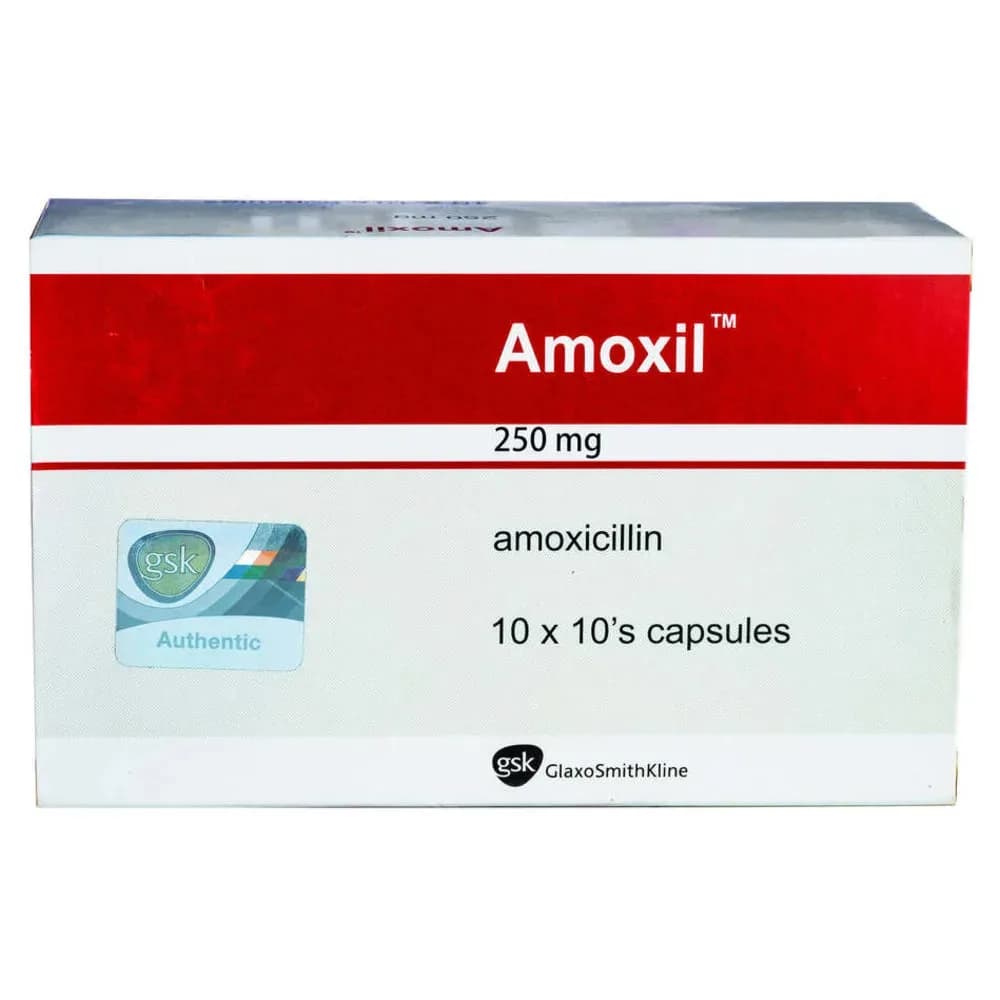 | GlaxoSmithKline | 250mg | Capsule | 04-2508 |
 | GSK | 125mg/5ml, 250mg/5ml | Suspension | 04-2402 |
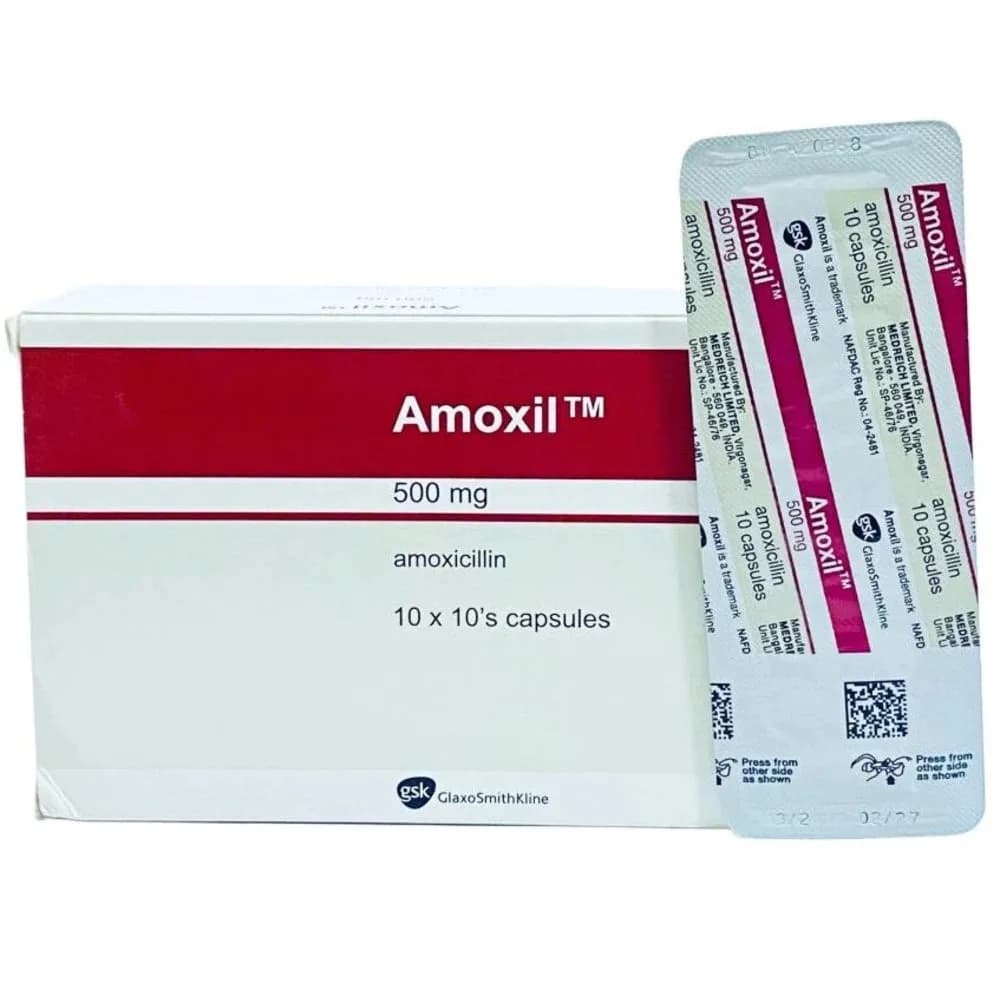 | GlaxoSmithKline | 500mg | Capsule | |
| Emmox Suspension | Emzor Pharmaceutical Industries Limited | 125mg/5ml | Suspension | 04-5251 |
| Acimox | A.C. Drugs Ltd | 500mg | Capsule | A4-8982 |
| Avromox | Avro Pharma Limited | 500mg | Capsule | A4-5662 |
| Imox-500 | Chris-Ejik Pharmaceuticals & Healthcare Products Limited | 500mg | Capsule | 04-2284 |
Amoxicillin Price in Nigeria
As of October 2026, the only amoxicillin our sampled online pharmacies (HealthPlus) list is Amoxil, at about ₦5,770 for syrup. That is Amoxil's price, not the molecule's: 38 amoxicillin brands are NAFDAC-registered and generic versions usually cost less, so ask a licensed pharmacy for a generic by name and check its NAFDAC number before you pay.
Every Amoxicillin listing in our online-pharmacy sampling was one brand, so we quote no range for the molecule — its price is that brand's, on its own page.
Amoxicillin price by brand
One brand family, priced from each page's own listings.
- Amoxil 500 price₦29,540· 1 listing
- Amoxil Suspension price₦5,770· 1 listing
How to Verify Your Amoxicillin is Genuine
- 1Check the NAFDAC registration number printed on the pack. In our October 2026 copy of the register, Acimox (A4-8982), Imox-500 (04-2284) and Emmox Suspension (04-5251) are Active; Avromox (A4-5662) is recorded Inactive since September 2026
- 2Enter the number in our free NAFDAC checker and confirm the product name, strength and holder match the pack. Amoxil 250 (04-2508) is recorded Expired and Amoxil Suspension (04-2402) Expired in our copy — confirm either on the official Greenbook before relying on it, and treat an Amoxil pack with no number at all as the warning sign
- 3Where the pack carries a NAFDAC Mobile Authentication Service scratch panel, text the code to 38353; not every registered product carries one, so its absence alone proves nothing
- 4Buy from reputable pharmacies rather than open markets or roadside vendors. Registered pharmacies are more likely to stock genuine products.
- 5Check the expiry date and ensure the packaging is intact with no signs of tampering.
- 6Look for the manufacturer's hologram or security features on the pack if available.
- 7If the price seems unusually cheap compared to what pharmacies around you charge, be cautious — it may be substandard or counterfeit.
Where to Buy
Buying Amoxicillin wholesale, by the carton
Cartons of amoxicillin are bought at Nigeria's open drug markets: Idumota Market in Lagos, Ariaria Market in Aba, Ogbogwu Market in Onitsha and Sabon Gari Market in Kano. Each guide says where the market is and how to buy there safely; where we list sellers, they are named.
- Idumota Market, Lagos · wholesale sellers in Idumota Market
- Ariaria Market, Aba
- Ogbogwu Market, Onitsha
- Sabon Gari Market, Kano
No shop we list has Amoxicillin on its confirmed product list yet — the market guides still tell you where the trade happens and how to buy there safely.
Which one are you?
I'm buying amoxicillin
Tell us what you need and the quantity, and we'll connect you with a verified, NAFDAC-registered source. Free, no obligation.
I sell amoxicillin
Get a free page where buyers look for them: your products, your number, how to find your shop. Independent of NAFDAC and government. Nothing goes live until you have seen it and approved it. Why list? →
Wherever you buy, buy only from licensed pharmacies and verified distributors — not roadside vendors — and verify the pack's NAFDAC registration before you pay. Buying Amoxicillin in bulk or for resale? See how to buy medicines in bulk in Nigeria safely.
Need Amoxicillin in bulk, or can't find it near you?
Tell us what you need and we'll connect you with a verified, NAFDAC-registered source.
What is Amoxicillin?
In Nigeria amoxicillin is on every pharmacy and patent-medicine shelf, as 250 mg and 500 mg capsules, a suspension for children and dispersible tablets. Our October 2026 copy of the NAFDAC register lists 341 amoxicillin products, 130 of them with Active registrations, most made in Nigeria — A.C. Drugs' Acimox, Avro's Avromox, Chris-Ejik's Imox and Emzor's Emmox suspension among them. GSK's Amoxil, the name most people still ask for, reads differently in the register: the Amoxil 250 capsule registration is recorded Expired (December 2024) and the Amoxil suspension Inactive (September 2025). That is a renewal matter for the holder rather than proof any pack is fake, but it means an Amoxil pack should be checked by the number printed on it, not trusted by its name. The suspension matters most: ear, throat and chest infections in children are among the commonest reasons a Nigerian family buys an antibiotic at all.
One major concern with amoxicillin use in Nigeria is the growing problem of antibiotic resistance driven by self-medication. Many Nigerians purchase amoxicillin over the counter without a prescription, often taking incomplete courses or using it for viral infections like colds and malaria where antibiotics are ineffective. This misuse has contributed to rising resistance rates, making previously treatable infections harder to manage. The National Agency for Food and Drug Administration and Control (NAFDAC) and health authorities continue to advocate for responsible antibiotic use to preserve the effectiveness of this essential medicine.
What is Amoxicillin used for?
In Nigeria, Amoxicillin is commonly used for:
- Urinary tract infections (UTIs) — a very common complaint at Nigerian hospitals and clinics
- Upper and lower respiratory tract infections including bronchitis and pneumonia
- Ear infections (otitis media), especially in children
- Dental infections and abscesses
- Typhoid fever — usually in combination with other antibiotics
- Skin and soft tissue infections
- Throat infections including streptococcal pharyngitis (strep throat)
- Helicobacter pylori eradication (as part of triple therapy for peptic ulcer disease)
Dosage
IMPORTANT
Always follow your doctor's or pharmacist's instructions. The information below is for general reference only.
Adults
The standard adult dose is 500mg taken three times daily (every 8 hours) for 5 to 7 days. For milder infections, 250mg three times daily may be sufficient. The capsules should be swallowed whole with a full glass of water and can be taken with or without food. It is essential to complete the full course of treatment even if you start feeling better, to prevent antibiotic resistance.
Children
Dosage for children is based on body weight. The usual dose is 25mg to 50mg per kilogram of body weight per day, divided into three doses (every 8 hours). For children who cannot swallow capsules, amoxicillin suspension is available in 125mg/5ml and 250mg/5ml strengths. Your pharmacist will help measure the correct dose using the child's weight. Always use the measuring spoon or syringe provided — do not use household spoons.
Elderly
Elderly patients generally take the same dose as adults, but your doctor may adjust the dose if there is reduced kidney function. Kidney function tests may be recommended for elderly patients on prolonged courses.
Always complete the full course of antibiotics as prescribed. Do not share your medication with others, even if they have similar symptoms. Store suspension in the refrigerator after reconstitution and discard after 14 days. If you miss a dose, take it as soon as you remember, but do not double up on your next dose.
Side Effects
General information for a reader holding a pack, not a substitute for a doctor or pharmacist. If something on the serious list is happening, seek care now.
Common side effects
- •Diarrhoea — this is the most frequently reported side effect
- •Nausea and vomiting
- •Skin rash
- •Stomach discomfort or abdominal pain
- •Headache
Serious side effects — seek medical help immediately
- Severe allergic reaction (anaphylaxis) — symptoms include difficulty breathing, swelling of the face, lips, or throat, and severe skin rash. This is a medical emergency.
- Stevens-Johnson syndrome — a rare but serious skin reaction with blistering and peeling
- Clostridium difficile-associated diarrhoea — severe, watery diarrhoea that does not stop
- Liver problems — yellowing of the skin or eyes (jaundice), dark urine
- Blood disorders — unusual bruising, bleeding, or persistent sore throat
When to see a doctor
Seek immediate medical attention if you develop difficulty breathing, severe swelling, widespread rash with blistering, severe diarrhoea with blood, or yellowing of the skin. In Nigeria, go to the nearest hospital emergency unit or call your doctor immediately. If you are in a rural area, visit the nearest primary health centre. Do not wait for symptoms to worsen — allergic reactions to penicillins can be life-threatening.
Warnings & Precautions
General information for a reader holding a pack, not a substitute for a doctor or pharmacist. If something on the serious list is happening, seek care now.
Do not take Amoxicillin if you have:
- Known allergy to penicillin or any other beta-lactam antibiotic (such as ampicillin or amoxicillin-clavulanate)
- Previous severe allergic reaction (anaphylaxis) to any penicillin-type antibiotic
- History of liver problems associated with amoxicillin use
- Infectious mononucleosis (amoxicillin can cause a distinctive rash in this condition)
Drug interactions
- •Methotrexate — amoxicillin can increase methotrexate toxicity
- •Warfarin — may increase the anticoagulant effect, requiring closer monitoring of INR
- •Oral contraceptive pills — although evidence is debated, some clinicians advise using additional contraception during antibiotic treatment
- •Probenecid — increases amoxicillin blood levels by reducing kidney excretion
- •Allopurinol — increased risk of skin rash when taken together
Pregnancy & Breastfeeding
Amoxicillin is generally considered safe for use during pregnancy and breastfeeding. It is classified as Category B in pregnancy, meaning animal studies have shown no risk, and it is widely prescribed for pregnant women in Nigeria for conditions like UTIs and respiratory infections. Small amounts pass into breast milk but are not usually harmful to the nursing infant. However, always consult your doctor or pharmacist before taking any medication during pregnancy or while breastfeeding.
Used for these conditions
Related Resources for Amoxicillin
Guides, articles, and tools related to Amoxicillin and other antibiotics medicines in Nigeria.
Frequently Asked Questions
Sources
- •NAFDAC Greenbook — the official database of all products registered with Nigeria's National Agency for Food and Drug Administration and Control. Brand-level NAFDAC numbers for Amoxicillin on this page were cross-referenced against the Greenbook.
- •WHO Model List of Essential Medicines — Amoxicillin is included in the WHO's list of essential medicines, meaning it is considered essential for basic healthcare needs.
- •British National Formulary (BNF) dosing and interaction guidance for Amoxicillin.
- •Nigerian Standard Treatment Guidelines (Federal Ministry of Health).
Daily puzzle: Meddle — pair five brands with their medicines. New game at midnight.