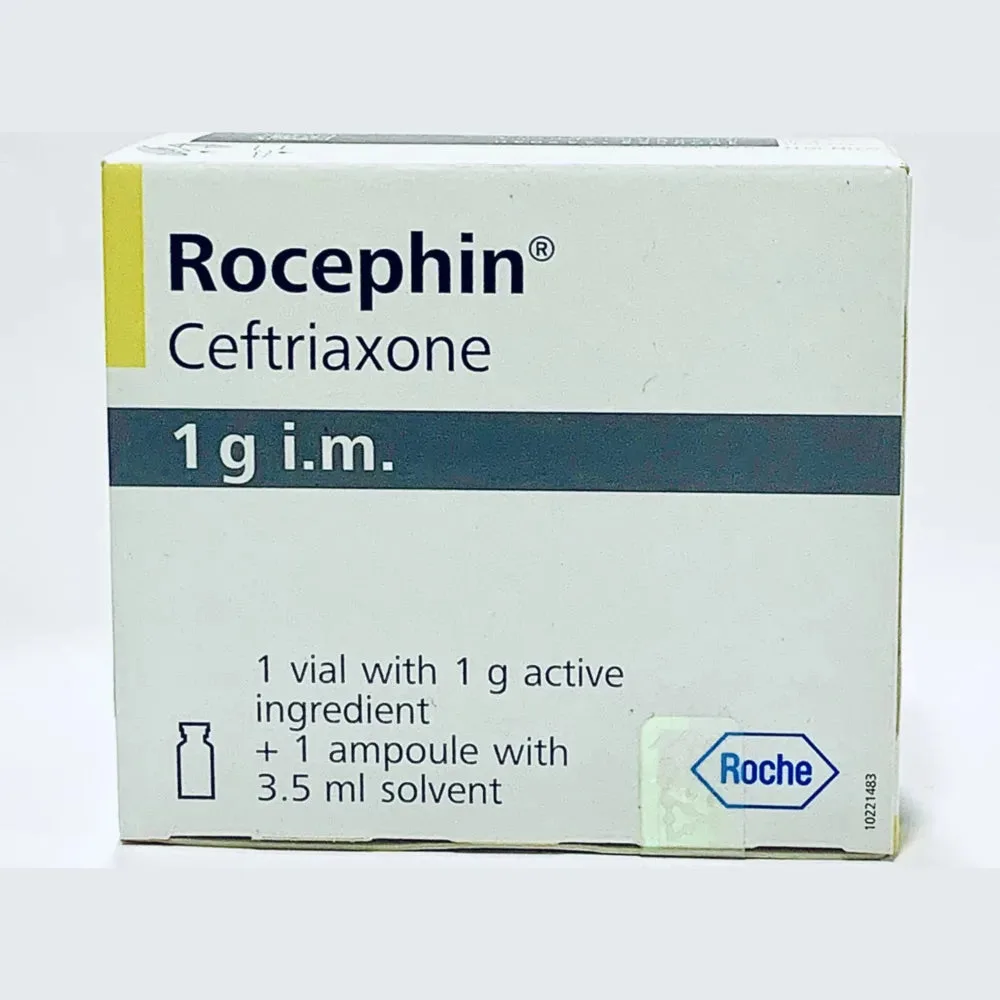
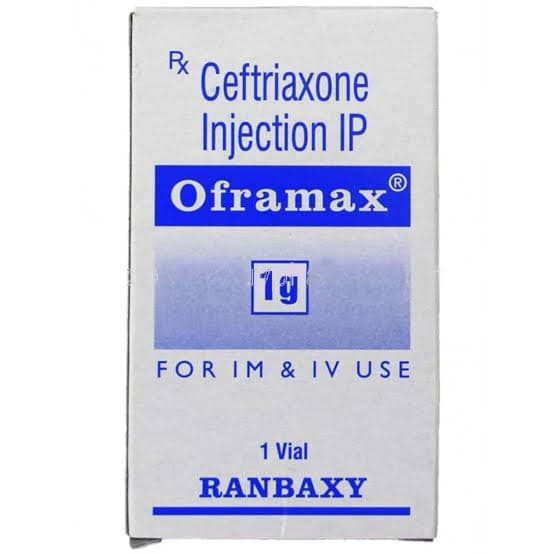
Ceftriaxone is a powerful injectable antibiotic belonging to the third-generation cephalosporin class. It works by interfering with the formation of bacterial cell walls, causing the bacteria to break apart and die. Ceftriaxone has an exceptionally broad spectrum of activity, covering a wide range of gram-positive and gram-negative bacteria, and is one of the most important antibiotics used in hospital settings across Nigeria. It is administered either as an intramuscular (IM) injection or as an intravenous (IV) infusion, and one of its key advantages is once-daily dosing — a single dose remains effective in the body for 24 hours, simplifying treatment in busy Nigerian hospitals and clinics.
In the NAFDAC register
174 registered products
from 128 registration holders
What it costs online
Our sampling found 3 listings (October 2026) — every one of them Rocephin, listed at ₦14,850–₦16,460. That is Rocephin's price, not the molecule's — one brand's price cannot honestly stand for a molecule the register lists under many, so no market-wide figure is shown — see the Rocephin page for what those listings cost.
Brands of Ceftriaxone in Nigeria
Comes as
- Powder for injection1 g· 37 makers1000 mg· 6 makers
- Injection1 g· 31 makers1000 mg· 6 makers
In combinations: Ceftriaxone + Sulbactam · Ceftriaxone + Tazobactam
Those 174 products from 128 registration holders, counted in our October 2026 copy of the register, include combination products and older listings; below are the most common brands.
Ceftriaxone Price in Nigeria
As of October 2026, the only ceftriaxone our sampled online pharmacies (HealthPlus and MedPlus) list is Rocephin, at about ₦16,460. That is Rocephin's price, not the molecule's: 92 ceftriaxone brands are NAFDAC-registered and generic versions usually cost less, so ask a licensed pharmacy for a generic by name and check its NAFDAC number before you pay.
Every Ceftriaxone listing in our online-pharmacy sampling was one brand, so we quote no range for the molecule — its price is that brand's, on its own page.
Ceftriaxone price by brand
The only Ceftriaxone brand our sampling found, priced from its own listings.
- Rocephin price₦14,850–₦16,460· 3 listings
How to Verify Your Ceftriaxone is Genuine
- 1Check for a valid NAFDAC registration number on every vial and outer packaging of ceftriaxone you receive.
- 2If the product has a NAFDAC MAS (Mobile Authentication Service) panel, scratch and send the code to 38353 to verify authenticity.
- 3Ceftriaxone should only be purchased and stocked by registered pharmacies and hospital pharmacies, not from open markets or unlicensed vendors.
- 4Examine the vial carefully — genuine ceftriaxone powder should be a white to yellowish-white crystalline powder. If the powder appears discoloured, clumped, or the vial seal is broken, do not use it.
- 5Verify the expiry date and batch number. Cross-check with the distributor or manufacturer if in doubt.
- 6If you are receiving ceftriaxone treatment at a private clinic, you have the right to see the vial and verify the brand, NAFDAC registration number, and expiry date before the injection is given.
Where to Buy
Buying Ceftriaxone wholesale, by the carton
Cartons of ceftriaxone are bought at Nigeria's open drug markets: Idumota Market in Lagos, Ariaria Market in Aba, Ogbogwu Market in Onitsha and Sabon Gari Market in Kano. Each guide says where the market is and how to buy there safely; where we list sellers, they are named.
- Idumota Market, Lagos · wholesale sellers in Idumota Market
- Ariaria Market, Aba
- Ogbogwu Market, Onitsha
- Sabon Gari Market, Kano
No shop we list has Ceftriaxone on its confirmed product list yet — the market guides still tell you where the trade happens and how to buy there safely.
Which one are you?
I'm buying ceftriaxone
Tell us what you need and the quantity, and we'll connect you with a verified, NAFDAC-registered source. Free, no obligation.
I sell ceftriaxone
Get a free page where buyers look for them: your products, your number, how to find your shop. Independent of NAFDAC and government. Nothing goes live until you have seen it and approved it. Why list? →
Wherever you buy, buy only from licensed pharmacies and verified distributors — not roadside vendors — and verify the pack's NAFDAC registration before you pay. Buying Ceftriaxone in bulk or for resale? See how to buy medicines in bulk in Nigeria safely.
Need Ceftriaxone in bulk, or can't find it near you?
Tell us what you need and we'll connect you with a verified, NAFDAC-registered source.
What is Ceftriaxone?
In Nigeria, ceftriaxone is extremely commonly used in private clinics, general hospitals, and teaching hospitals alike. It is available under several brand names, including Rocephin (Roche) and Oframax. Every ceftriaxone registration in our copy of the NAFDAC Greenbook records a factory outside Nigeria — mostly India and China — including those registered by Nigerian companies such as Fidson Healthcare, whose ceftriaxone is made in India. The 1g vial is the most widely stocked strength. Ceftriaxone is frequently the first injectable antibiotic reached for when a patient presents with a serious infection — from typhoid fever and pneumonia to meningitis and sepsis. In many Nigerian private hospitals and clinics, it is common practice to administer ceftriaxone injections as part of the treatment for a wide variety of febrile illnesses, sometimes even before a definitive diagnosis is made.
The World Health Organization classifies ceftriaxone as a 'Watch' antibiotic under its AWaRe system, meaning its use should be carefully controlled to prevent resistance. Despite this, ceftriaxone is one of the most frequently prescribed injectable antibiotics in Nigeria, and there are growing concerns about overuse contributing to the emergence of resistant bacteria, including extended-spectrum beta-lactamase (ESBL) producing organisms. Healthcare providers are encouraged to reserve ceftriaxone for situations where it is truly needed and to obtain culture and sensitivity results whenever possible before initiating treatment. Responsible use of this vital antibiotic is essential to ensure it remains effective for future generations.
What is Ceftriaxone used for?
In Nigeria, Ceftriaxone is commonly used for:
- Severe bacterial infections that require injectable antibiotic therapy
- Bacterial meningitis — ceftriaxone is a first-line treatment for bacterial meningitis in adults and children in Nigeria
- Gonorrhoea — a single 250mg to 500mg intramuscular injection (usually combined with oral azithromycin)
- Typhoid fever — especially multidrug-resistant (MDR) and ciprofloxacin-resistant typhoid
- Community-acquired pneumonia requiring hospitalisation
- Complicated urinary tract infections and pyelonephritis (kidney infections)
- Sepsis and septicaemia (blood stream infections)
- Intra-abdominal infections (usually combined with metronidazole)
- Pre-operative surgical prophylaxis — given before surgery to prevent post-operative infections
- Skin and soft tissue infections that are severe or not responding to oral antibiotics
- Lyme disease (in regions where applicable)
Dosage
IMPORTANT
Always follow your doctor's or pharmacist's instructions. The information below is for general reference only.
Adults
The standard adult dose is 1g to 2g given once daily by intravenous (IV) or intramuscular (IM) injection. For most infections, 1g once daily is sufficient. For meningitis, the dose is increased to 2g twice daily (every 12 hours). For surgical prophylaxis, a single 1g to 2g dose is given 30 to 60 minutes before the incision. For gonorrhoea, a single IM dose of 250mg to 500mg is given. For typhoid, 2g once daily for 10 to 14 days is commonly used. The IM injection is given into the upper outer quadrant of the buttock (gluteal muscle) and can be reconstituted with 1% lidocaine to reduce pain at the injection site.
Children
The paediatric dose is 50mg to 100mg per kilogram per day, given as a single daily dose or divided into two doses for severe infections. The maximum daily dose for children is 4g. For bacterial meningitis in children, 100mg per kilogram per day (maximum 4g) is recommended. For neonates (newborns), the dose should not exceed 50mg per kilogram per day. IMPORTANT: Ceftriaxone must NOT be given to neonates (especially premature infants) who are receiving intravenous calcium-containing solutions, as it can form fatal precipitates.
Elderly
Elderly patients generally receive the standard adult dose. However, dose adjustment may be necessary in patients with combined severe liver and kidney impairment. Close monitoring of kidney and liver function is recommended in elderly patients receiving prolonged courses.
Ceftriaxone must only be administered by a trained healthcare professional — nurse, doctor, or pharmacist. It should never be self-administered at home. IM injections can be painful; mixing with 1% lidocaine solution can help reduce discomfort. IV infusions should be given over at least 30 minutes. Do not mix ceftriaxone in the same IV line as calcium-containing solutions (such as Ringer's lactate or Hartmann's solution). Store reconstituted solution in the refrigerator and use within 6 hours at room temperature or 24 hours if refrigerated.
Side Effects
General information for a reader holding a pack, not a substitute for a doctor or pharmacist. If something on the serious list is happening, seek care now.
Common side effects
- •Pain, redness, and swelling at the injection site — this is the most common complaint, especially with IM injections
- •Diarrhoea
- •Nausea and vomiting
- •Skin rash
- •Elevated liver enzymes (usually detected on blood tests, often without symptoms)
Serious side effects — seek medical help immediately
- Severe allergic reaction (anaphylaxis) — difficulty breathing, throat swelling, collapse. Can occur within minutes of injection.
- Biliary sludge and gallbladder complications — ceftriaxone can form precipitates in the gallbladder, causing symptoms similar to gallstones. Usually reversible on stopping the drug.
- Clostridium difficile-associated diarrhoea — severe, persistent watery or bloody diarrhoea
- Blood disorders — including haemolytic anaemia (destruction of red blood cells), neutropenia, and thrombocytopenia
- Fatal ceftriaxone-calcium precipitates in neonates — NEVER co-administer with IV calcium in newborns
- Stevens-Johnson syndrome — severe blistering skin reaction
- Kidney damage — especially with concurrent use of nephrotoxic drugs or dehydration
When to see a doctor
Since ceftriaxone is administered in clinical settings, healthcare providers will be monitoring for immediate reactions. However, patients should report any of the following after receiving a ceftriaxone injection: difficulty breathing or throat tightness (even hours after the injection), severe or persistent diarrhoea (especially if bloody), right upper abdominal pain (may indicate gallbladder problems), unusual bruising or bleeding, yellowing of the skin or eyes, or widespread skin rash with blistering. If you develop any of these symptoms after leaving the clinic or hospital, return immediately or go to the nearest emergency unit.
Warnings & Precautions
General information for a reader holding a pack, not a substitute for a doctor or pharmacist. If something on the serious list is happening, seek care now.
Do not take Ceftriaxone if you have:
- Known severe allergy to ceftriaxone, any other cephalosporin, or penicillin (approximately 5-10% cross-reactivity between penicillins and cephalosporins)
- Premature neonates up to a corrected age of 41 weeks — risk of fatal ceftriaxone-calcium precipitates
- Full-term neonates with jaundice, low albumin, or acidosis — ceftriaxone displaces bilirubin from albumin, worsening jaundice
- Neonates requiring IV calcium-containing solutions — fatal precipitates can form in the lungs and kidneys
- Known hyperbilirubinaemia in neonates
Drug interactions
- •Calcium-containing IV solutions (Ringer's lactate, Hartmann's solution, TPN with calcium) — risk of fatal precipitates, especially in neonates. Must not be administered simultaneously even via different IV lines in neonates.
- •Warfarin — ceftriaxone may enhance the anticoagulant effect; INR monitoring recommended
- •Aminoglycoside antibiotics (gentamicin, amikacin) — may cause additive kidney damage. Do not mix in the same IV infusion bag, though they can be used together when given separately.
- •Loop diuretics (furosemide) — increased risk of kidney toxicity when used in combination
- •Oral contraceptives — may reduce effectiveness of hormonal contraception (though evidence is limited)
- •Chloramphenicol — may antagonise the bactericidal activity of ceftriaxone; avoid combination
Pregnancy & Breastfeeding
Ceftriaxone crosses the placenta but is generally considered safe for use during pregnancy when clinically indicated. It is classified as Category B, meaning animal studies have not shown harm to the foetus. It is commonly used during pregnancy in Nigeria for serious infections such as pyelonephritis, sepsis, and gonorrhoea. Ceftriaxone is excreted in breast milk in low concentrations and is generally compatible with breastfeeding, though the infant should be monitored for diarrhoea and thrush. The decision to use ceftriaxone during pregnancy or breastfeeding should always be made by a qualified doctor weighing the benefits against potential risks.
Used for these conditions
Related Resources for Ceftriaxone
Guides, articles, and tools related to Ceftriaxone and other antibiotics medicines in Nigeria.
Frequently Asked Questions
Sources
- •NAFDAC Greenbook — the official database of all products registered with Nigeria's National Agency for Food and Drug Administration and Control. Brand-level NAFDAC numbers for Ceftriaxone on this page were cross-referenced against the Greenbook.
- •WHO Model List of Essential Medicines — Ceftriaxone is included in the WHO's list of essential medicines, meaning it is considered essential for basic healthcare needs.
- •British National Formulary (BNF) dosing and interaction guidance for Ceftriaxone.
- •Nigerian Standard Treatment Guidelines (Federal Ministry of Health).
Daily puzzle: Meddle — pair five brands with their medicines. New game at midnight.